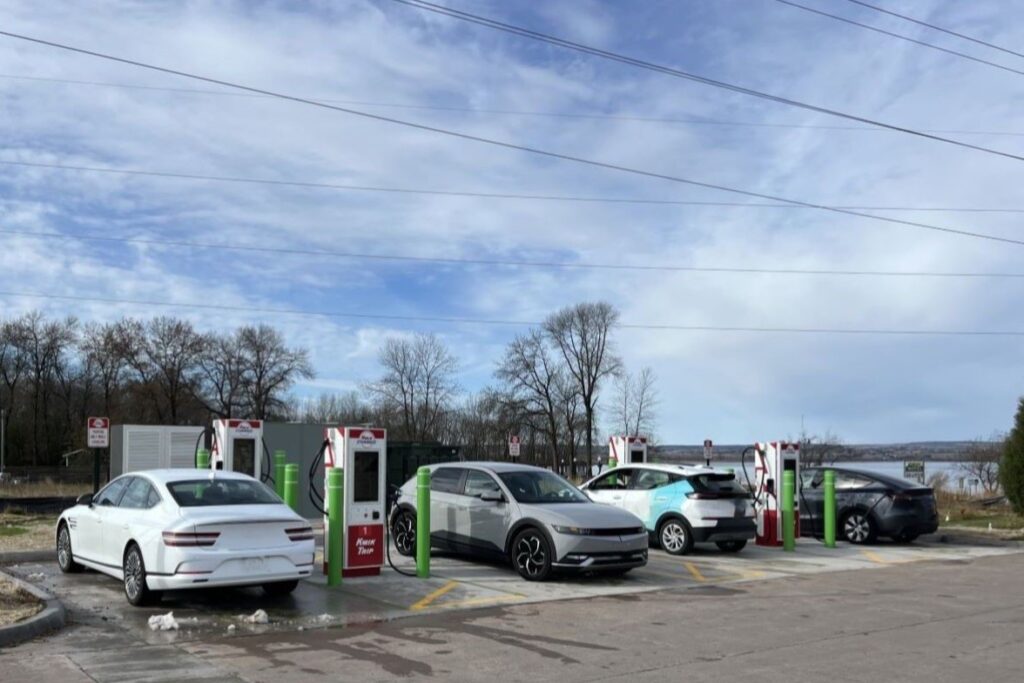
Wisconsin has restarted its electric vehicle (EV) charging program, allocating $14 million to build 26 new fast-charging sites. This move follows a federal court ruling that forced the release of National Electric Vehicle Infrastructure (NEVI) funds previously frozen by the Trump Administration.
Key Takeaways
- $14 million allocated for 26 new fast-charging sites across Wisconsin.
- The state now has a total of 78 funded EV charging projects, aiming to cover major travel corridors.
- New stations will be non-proprietary and open-access, ensuring availability for all drivers.
Wisconsin’s Department of Transportation (WisDOT) selected the new locations based on their ability to fill gaps along 15 designated interstate and highway corridors. The chosen sites include Kwik Trip convenience stores, hotels, service stations, a Culver’s restaurant, and a chocolate shop.
Governor Tony Evers expressed his enthusiasm for the program, stating that it ensures Wisconsin’s infrastructure meets modern needs and supports the state’s transition to clean energy. WisDOT spokesperson John DesRivieres emphasized the importance of expanding EV infrastructure as more people switch to electric vehicles.
The NEVI program funds up to 80% of eligible project costs for EV chargers, requiring that stations be non-proprietary and open-access to ensure all drivers can use them. This initiative aims to make long-distance travel in electric cars easier and more convenient across Wisconsin’s major highways.
Frequently Asked Questions
How much of the project costs are covered by NEVI funds?
The NEVI program covers up to 80% of eligible project costs for EV chargers, with states expected to fund the remaining 20%.
What criteria were used to select the new charging station locations?
New stations were chosen based on their ability to cover gaps along designated corridors, development potential, and extended operating hours.
The restart of Wisconsin’s EV charging program marks a significant step towards making electric vehicles more accessible for everyday use. With 78 funded projects now in place or planned, the state is well on its way to providing seamless travel experiences for all drivers.
