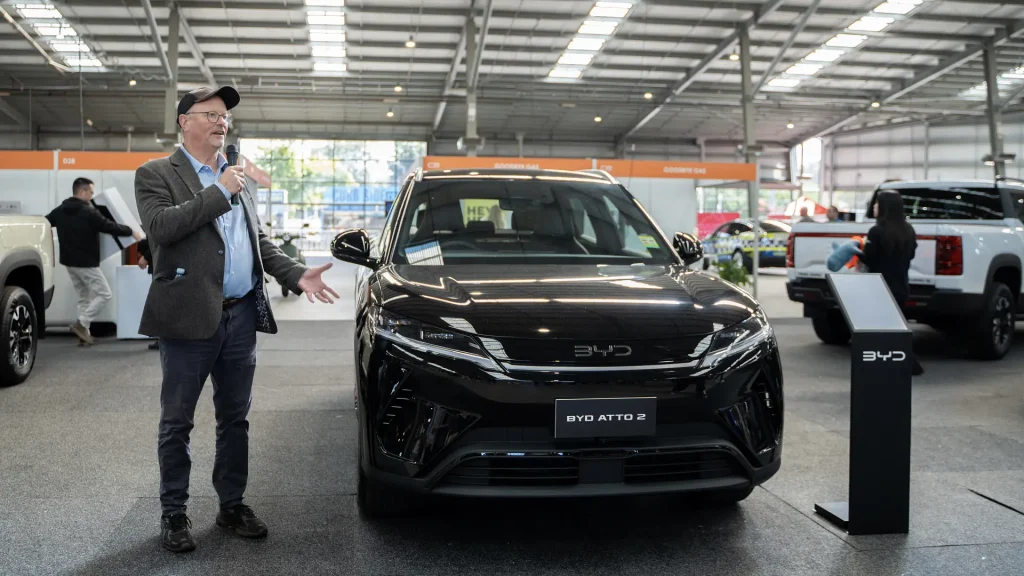
TV star and EV advocate Robert Llewellyn has highlighted the critical importance of vehicle-to-grid (V2G) technology in accelerating electric car adoption. According to Llewellyn, founder of the Everything Electric expo, the slow rollout of V2G is frustrating despite its potential benefits.
Key Takeaways
- V2G and vehicle-to-home (V2H) technology are crucial for electric car adoption.
- Australia has four million rooftop solar installations, but V2G deployment is lagging.
- Llewellyn believes the transition to renewables would benefit from faster V2G implementation.
Robert Llewellyn emphasized that discussions about V2G technology began over a decade ago and have yet to see widespread adoption. The founder of Everything Electric, an expo focused on electric vehicles and home energy solutions, noted the potential for V2G to power homes from cars during peak electricity demand.
Australia boasts one of the highest rates of rooftop solar installations globally, with approximately four million systems in place as of late 2024. However, the deployment of V2G technology remains slow due to regulatory hurdles and technological challenges. Llewellyn pointed out that this technology could complement existing renewable energy sources like rooftop solar.
The Department of Climate Change, Energy, the Environment and Water reports that one in three Australian homes now have a rooftop solar system. Despite this significant penetration of renewable energy, V2G adoption has not kept pace with other advancements in the EV sector. Llewellyn stressed the need for faster implementation to fully leverage the benefits of electric vehicles.
Current regulatory frameworks and technological limitations are cited as major barriers to rapid V2G deployment. Industry experts suggest that overcoming these challenges could significantly enhance the appeal of electric cars by allowing them to serve as mobile energy storage units, thereby reducing overall electricity costs for consumers.
Frequently Asked Questions
What is V2G technology?
V2G stands for vehicle-to-grid and allows electric vehicles to supply power back into the grid or home when needed, enhancing energy efficiency.
Why hasn’t V2G become mainstream yet?
The slow rollout of V2G technology is due to regulatory hurdles and technological challenges that need to be addressed for widespread adoption.
Llewellyn’s comments underscore the importance of accelerating V2G deployment as a key component in transitioning towards cleaner transportation options. He believes that overcoming current obstacles will significantly boost public confidence in electric vehicles, driving greater uptake across Australia.
