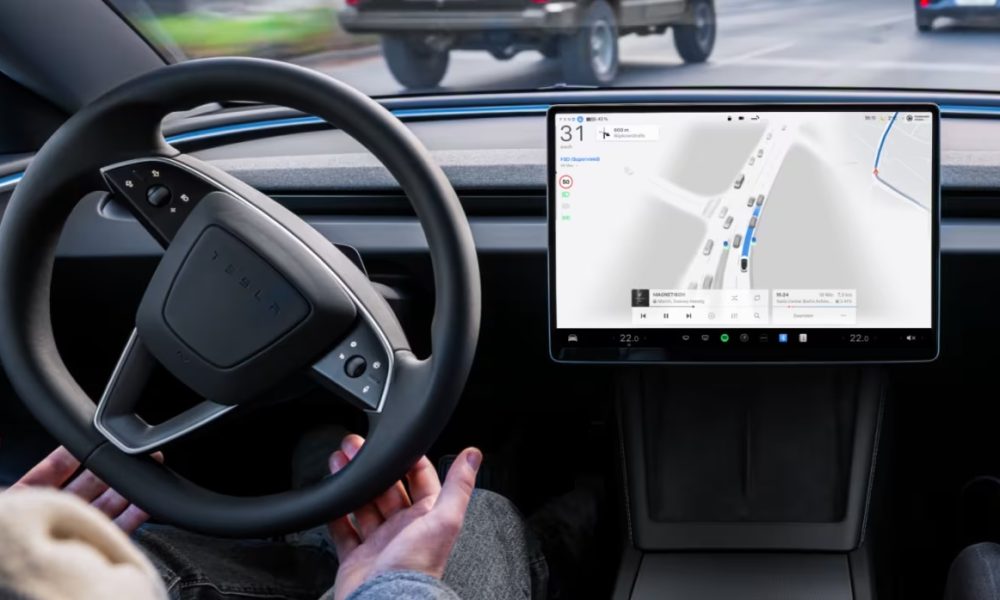
Tesla‘s recent Full Self-Driving (FSD) update, version 14.2.1, introduces significant changes to the Speed Profiles feature that have raised eyebrows among seasoned drivers and automotive enthusiasts alike. While the new system aims to enhance safety and efficiency on the road, it appears that some of these modifications may be too restrictive in real-world scenarios.
Key Takeaways
- The latest FSD update limits speed profiles to fixed increments, causing abrupt braking when switching between settings.
- Traffic adaptability is reduced as the system adheres strictly to preset speeds rather than real-time traffic conditions.
- Drivers report a noticeable gap in performance between adjacent speed profiles, leading to less smooth transitions and potentially unsafe driving behaviors.
The primary complaint among users of FSD v14.2.1 is the rigid adherence to predefined maximum speeds for each Speed Profile setting. For instance, the ‘Hurry’ profile now caps at 10 mph over the posted limit, without any flexibility based on surrounding traffic conditions. This contrasts sharply with earlier versions where drivers could expect more nuanced and adaptive speed adjustments.
Another issue highlighted by users is the abrupt braking pattern observed when switching from a higher to a lower Speed Profile setting. For example, transitioning from ‘Mad Max’ (the most aggressive profile) to ‘Hurry’ results in an immediate deceleration that can be jarring for both the driver and passengers. This sudden change disrupts the smooth flow of driving that many users have come to appreciate with previous iterations of FSD.
Furthermore, the set speed limits within each Speed Profile are seen as less functional when dealing with dynamic traffic situations. The inability to adjust speeds based on real-time conditions means that drivers may find themselves either too slow or too fast relative to surrounding vehicles, potentially leading to unsafe driving behaviors and increased stress for the driver.
Historically, Tesla has been quick to address such issues through subsequent updates, often incorporating user feedback to refine their systems. However, this latest update seems to have taken a step back in terms of adaptability and smoothness, which were hallmarks of earlier FSD versions like v13.2.
Frequently Asked Questions
Is there any way to revert to previous Speed Profile settings?
Tesla has not officially provided a rollback option for the current FSD update. Users are advised to monitor official Tesla channels or forums for potential updates addressing these issues.
Will future updates address these concerns?
Given Tesla’s history of incorporating user feedback, it is likely that upcoming versions will include refinements aimed at improving the adaptability and smoothness of Speed Profiles. However, there is no specific timeline for such changes.
In conclusion, while FSD v14.2.1 introduces several enhancements to highway operation and overall driving experience, the rigid nature of speed profile adjustments may deter some users from fully embracing this latest iteration. As always, Tesla’s commitment to continuous improvement suggests that these issues will be addressed in future updates.
