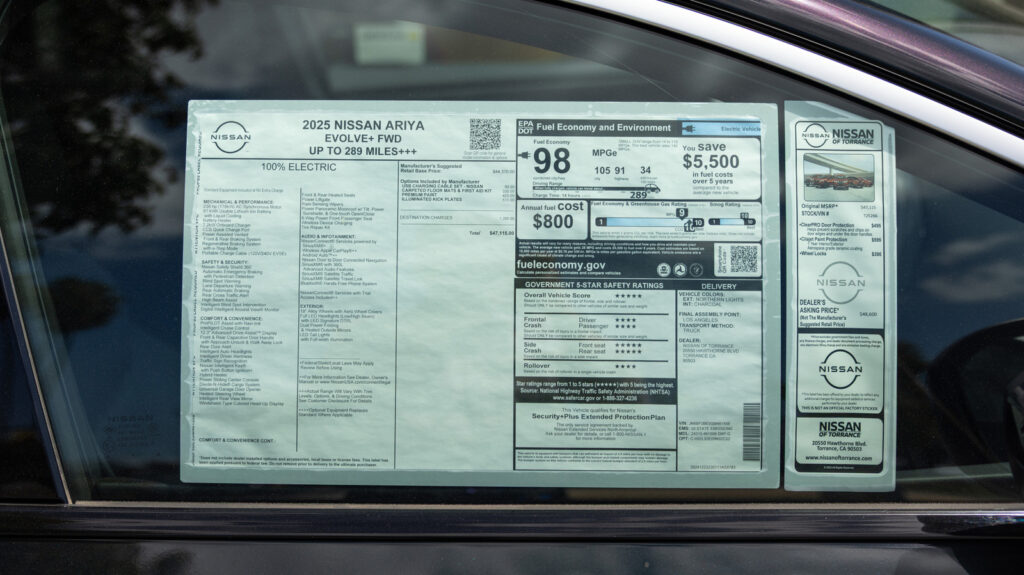
Despite the rising costs and record-high prices for new vehicles, car buyers in the United States are still required to pay destination charges, even if they live near the factory where their vehicle was manufactured. This non-negotiable fee covers transportation expenses from the manufacturing plant or port to the dealership.
Key Takeaways
- New car buyers must pay a mandatory destination charge, regardless of proximity to the factory.
- The average cost of destination charges has increased faster than inflation and new car prices.
- Negotiating for incentives or discounts is more effective in lowering overall costs than attempting to remove the destination fee.
Destination fees are a standard part of the Monroney sticker, which includes information about the vehicle’s specifications, warranty coverage, and MSRP. These charges vary based on factors such as the car’s size, weight, and whether it requires special handling during transport. For instance, large SUVs and pickup trucks typically have higher destination fees compared to compact sedans.
Automakers determine these fees by calculating the total cost of shipping all vehicles from their assembly lines and then averaging this expense across all buyers. This method ensures that the fee is consistent for everyone, regardless of distance to the factory or dealership location. However, there is growing advocacy within the industry for greater transparency in how these charges are calculated.
While destination fees have risen faster than inflation and new car prices, they remain a fixed cost that cannot be negotiated away. Instead, buyers should focus on negotiating incentives, discounts, free accessories, or comparing MSRP with dealer costs to reduce overall expenses. This approach has proven more effective in lowering the final price of a vehicle.
Frequently Asked Questions
Are destination charges negotiable?
No, destination charges are non-negotiable and mandatory for all new vehicles sold in the U.S. They cover transportation costs from the factory or port to the dealership.
How can I reduce my overall cost when buying a car?
Negotiating incentives, discounts, free accessories, or comparing MSRP with dealer costs is more effective in lowering your total vehicle cost than trying to remove the destination charge. These strategies help you achieve better value for your purchase.
In conclusion, while destination charges are a fixed component of new car purchases and cannot be waived, buyers can still find ways to reduce their overall expenses through negotiation and comparison shopping.
