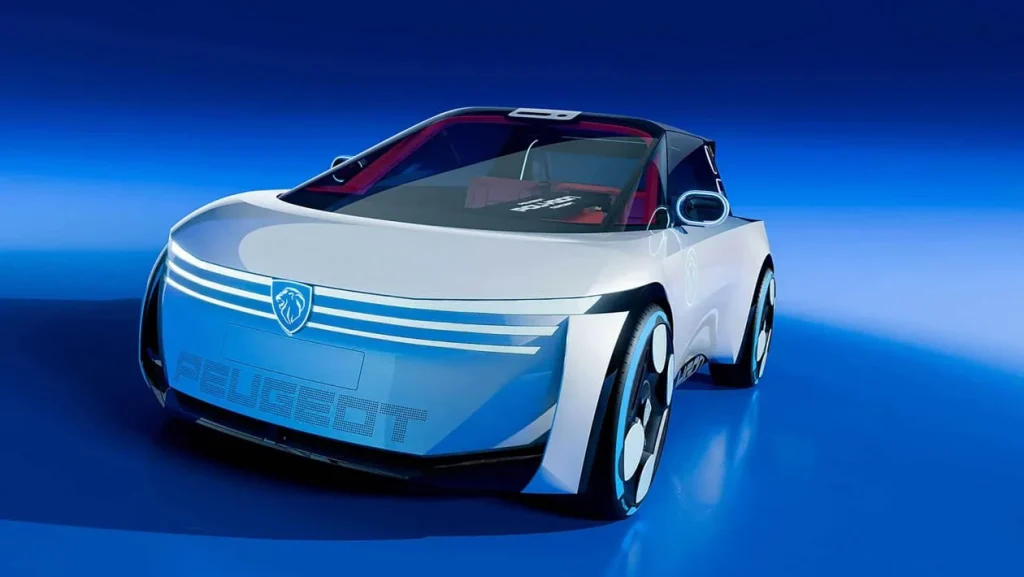
Peugeot’s new CEO Alain Favey has pledged that the company won’t follow in Renault’s footsteps by reviving retro designs. Instead of recreating past classics like the iconic Peugeot 205, the firm will draw inspiration from its heritage to create future-focused models.
Key Takeaways
- New Peugeot 208 won’t be a direct replica of the classic 205 but will take design cues from it.
- The car’s unique features include hypersquare steering and distinctive front and rear light bars inspired by the Polygon concept.
- Peugeot aims to differentiate itself through innovation rather than nostalgia, positioning its brand against new Chinese competitors.
Speaking at Auto Express, Favey emphasized that Peugeot would not copy Renault’s retro design strategy exemplified in models like the R5. Instead of recreating past successes directly, they’ll use them as inspiration to innovate and stay ahead of emerging brands without historical legacies.
The new 208 will showcase a clean-lined exterior with uninterrupted surfacing that contrasts sharply with its competitor’s chiseled look. The design is meant to signal Peugeot’s commitment to future-forward aesthetics, setting it apart from the retro-modernist styling seen in Renault’s recent releases.
Peugeot plans on using motorsport achievements and GTI models as additional brand-building tools alongside charismatic designs like those found on their Polygon concept car. They see these elements as crucial for attracting buyers who might otherwise choose newer Chinese brands lacking established automotive heritage.
The company also highlights technological advancements, such as the steer-by-wire hypersquare steering wheel featured in both the 208 and the Polygon model, which promises to enhance driving experience while maintaining a connection with Peugeot’s rich history of innovation.
Frequently Asked Questions
Will the new 208 have any direct references to past models?
The car will take inspiration from previous designs, but it won’t be a replica. For instance, rear pillar graphics on the upcoming model are reminiscent of the original 205 GTi.
How does Peugeot plan to compete against new Chinese brands?
The firm will emphasize its heritage in motorsport and sporty models like GTIs, combined with innovative technologies. This strategy aims to attract consumers looking for a blend of tradition and cutting-edge features.
In conclusion, while Renault opts for nostalgia-driven designs, Peugeot is betting on innovation and forward-thinking aesthetics to maintain its competitive edge in the increasingly crowded automotive market.
