Ever wonder why your car’s front end seems to handle bumps so smoothly? It all comes down to a simple yet effective suspension design called the MacPherson strut. Developed by Earle S. MacPherson, this technology has become ubiquitous due to its simplicity and cost-effectiveness.
Key Takeaways
- Simplicity: The MacPherson strut is easy to manufacture and maintain.
- Economy: It’s cheaper for automakers, which can translate into savings for you.
- Performance: Despite its simplicity, it offers reliable handling and comfort.
The story of the MacPherson strut starts with Earle S. MacPherson at General Motors in the 1940s. He designed this suspension system as part of a project to create an economical small car for Chevrolet called the Cadet.
But GM didn’t see it fit, so MacPherson left and joined Ford. There he got his chance to implement the design on two models: the 1951 Ford Consul and Zephyr. These cars weren’t big sellers in America but were quite popular overseas.
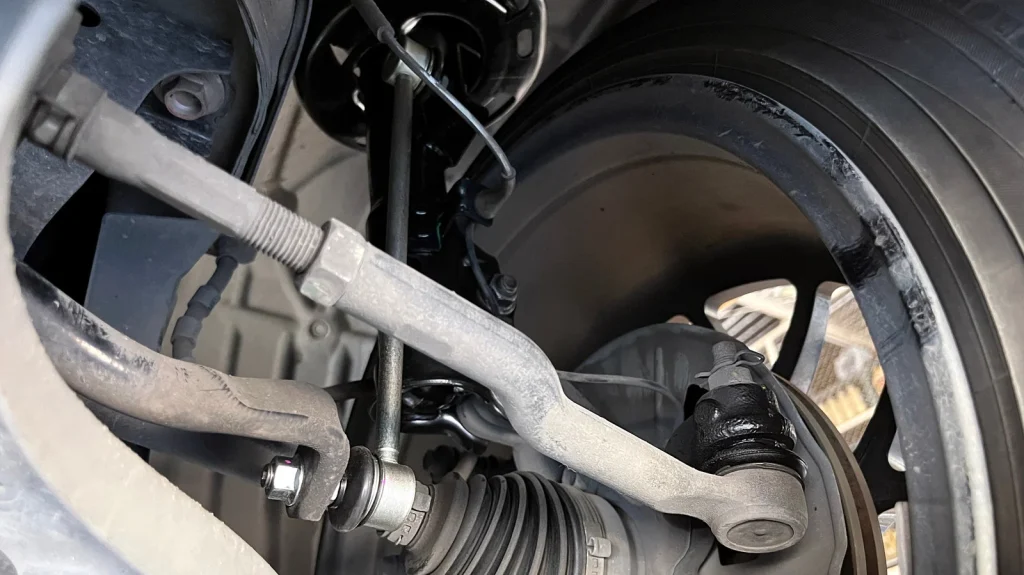
The real magic of the MacPherson strut lies in its basic components—a steering knuckle, lower control arm, coil spring, damper, and top mount. This setup forms a simple triangular structure that connects the wheel to the chassis efficiently without breaking the bank.
Today’s automakers love this design because it offers excellent performance at a low cost. It doesn’t just handle well; it also helps keep car prices down, which is great news for families looking for affordable yet reliable vehicles.
Frequently Asked Questions
Is the MacPherson strut only used in front-wheel-drive cars?
Nope! While it’s common there, many rear-wheel-drive and all-wheel-drive models also use this setup because of its reliability.
Does a car with MacPherson struts handle differently than one without them?
Absolutely. Cars with these struts typically offer better ride quality and handling, making bumps feel less jarring while driving.
The next time you’re out for a drive, remember the unsung hero behind your car’s smooth journey: the MacPherson strut!
