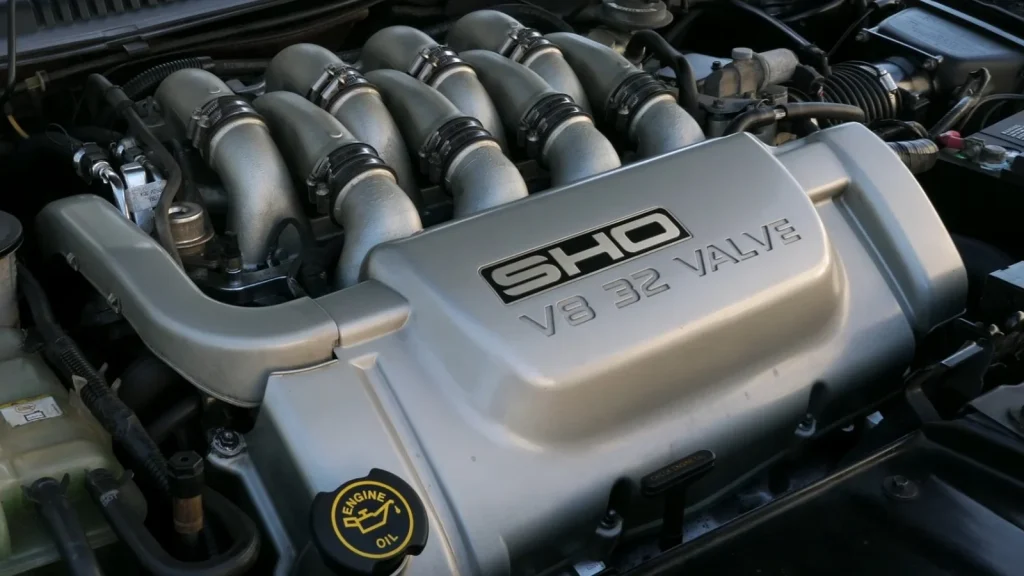
The Ford Taurus SHO, introduced in the mid-1990s, featured a unique and controversial engine design—a 60-degree V8. This unusual configuration set it apart from traditional automotive engineering practices but also raised eyebrows among enthusiasts.
Key Takeaways
- The SHO’s 60-degree V8 was lighter and more efficient than its predecessors, thanks to aluminum construction and advanced cooling systems.
- This engine design led to a higher failure rate compared to conventional V8s due to inherent balance issues and complexity in manufacturing.
- Despite these challenges, the Taurus SHO still managed impressive performance metrics, outpacing many competitors of its era.
The 60-degree angle between cylinders was an attempt by Ford engineers and Yamaha designers to innovate within cost constraints. The engine’s lightweight aluminum block helped it achieve a power-to-weight ratio that rivaled more conventional designs.
However, the unconventional V8 design introduced significant challenges in terms of balance and vibration management. This resulted in higher maintenance costs and reliability issues for owners compared to standard 90-degree V8 engines found in other luxury sedans like the BMW M5 or Mercedes-Benz E-Class.
The Taurus SHO’s acceleration figures were impressive, hitting 60 mph in just under seven seconds with its third-generation model. This performance placed it among the top contenders of its time despite the unique engineering challenges posed by the engine design.
Market context revealed that while the SHO was a niche product within Ford’s lineup, competing directly against luxury sedans from European marques like BMW and Mercedes-Benz wasn’t easy due to brand perception and reliability concerns associated with this unconventional technology.
Frequently Asked Questions
How does the SHO’s 60-degree V8 compare in terms of weight savings?
The aluminum construction allowed for a significant reduction in engine mass, making it lighter by approximately 50 pounds compared to its iron-block predecessor.
What were some common issues with the SHO’s unique V8 design?
Besides higher failure rates and reliability concerns, balancing and vibration management posed significant challenges due to the unconventional angle between cylinders.
In conclusion, while the Ford Taurus SHO’s 60-degree V8 was a bold engineering statement that attempted to blend performance with cost-effectiveness, its unique design ultimately limited its appeal in terms of long-term reliability and market acceptance compared to more traditional engine configurations.
