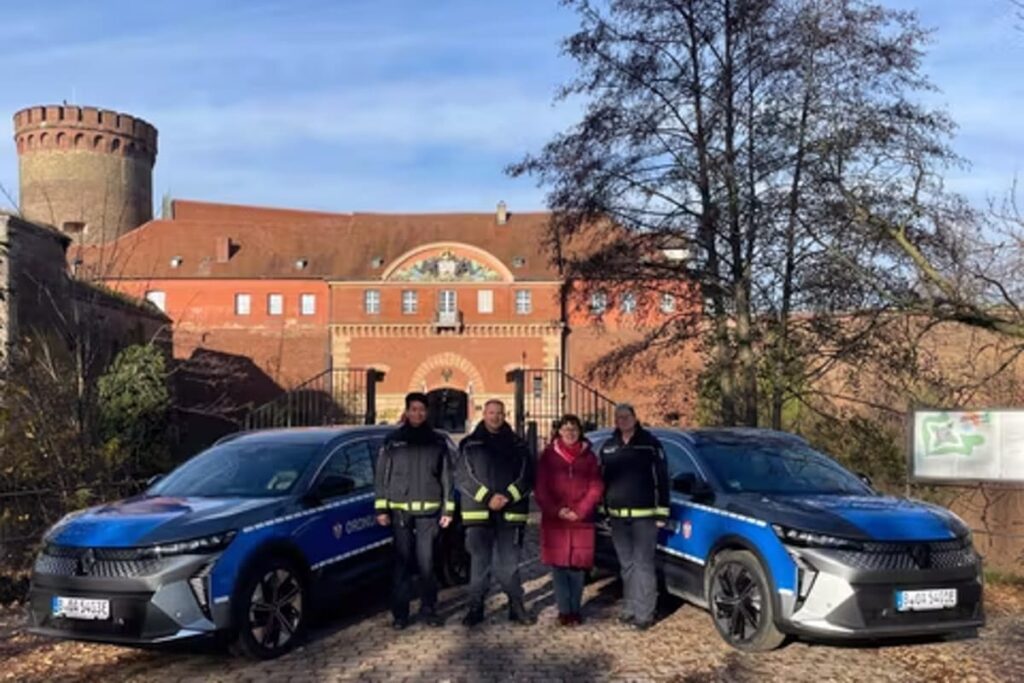
The Berlin district of Spandau is making a bold move towards electric mobility, replacing its existing fleet with seven new EVs. The decision comes as part of the city’s efforts to reduce carbon emissions and align with the broader goals set out in the Climate Protection and Energy Transition Act.
According to the press release by the Bezirksamt Spandau, six Renault Scénic E-Tech Electric vehicles will form the core of this new fleet. These models boast an impressive range of over 600 kilometers thanks to their large 87-kWh battery packs. A seventh addition is a Volkswagen Caddy Maxi electric van that can accommodate eight passengers and has a WLTP range of 416 kilometers.
The Spandau order office, which includes various departments such as the exterior service and veterinary supervision, will rely on these vehicles to fulfill their daily duties more sustainably. This shift not only supports local environmental initiatives but also demonstrates how public institutions are adopting cutting-edge technology for future-proof operations.
As we reported in our previous analysis, many cities worldwide are transitioning their fleets to electric models due to the growing demand for cleaner transportation options. Spandau’s initiative follows this global trend and highlights its commitment to sustainable urban development.
Tanja Franzke, CDU’s Bezirksstadträtin responsible for youth and health, emphasized the importance of such a move: “We are contributing significantly towards reducing CO₂ emissions while also showcasing that an effective administration relies on sustainable technologies.” The new EV fleet will replace existing combustion engine vehicles whose leases have expired.
While there’s no specific model name mentioned for the VW van, it seems to fit the profile of the ID. Buzz Pro, a compact electric vehicle designed for urban environments and small businesses. This move towards electrification is expected to influence other municipalities in Germany looking to reduce their carbon footprint.
