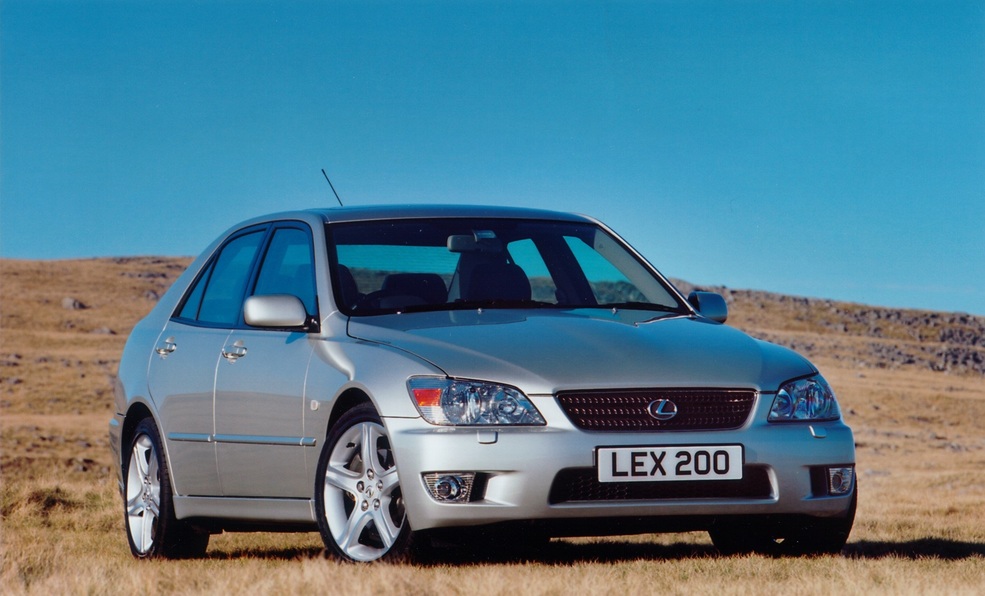
Lexus launched the IS200 in 1999 to compete with BMW’s 3 Series and change its image from a luxury brand known for large sedans like the LS400 to one offering sportier, smaller executive cars. The car was essentially a Toyota Altezza sold under a different name. Three versions were available: S base model, SE luxury trim, and Sport edition. Despite minor differences in features and interior design, all models shared similar mechanical components.
The IS200’s 2.0-litre six-cylinder engine offered engaging driving dynamics but was later upgraded to a more powerful 3.0-litre variant derived from the GS300 model. This upgrade reinforced Lexus’ executive car credentials and improved performance, making it an even more competitive option in the market.
Visually, designers aimed for a substantial presence with the IS200. Even though it was smaller than the BMW 3 Series in actual dimensions—71mm shorter, 5mm lower, and 19mm narrower—the car’s design tricks made it appear larger on the road. Inside, however, space constraints were evident when compared to its German rival.
The interior of the IS200 offered a luxurious experience with climate-controlled air conditioning, an autochanger for six CDs, and advanced traction control systems. Rear-wheel drive models also included a limited-slip differential in their Sport variant. Despite these features, the IS200 couldn’t quite match the appeal of BMW’s 3 Series due to its lack of four-cylinder variants or high-performance versions like the M3.
One of the notable aspects of the IS200 is its reliability; it’s often described as largely trouble-free. While Lexus aimed for broad market penetration, especially against GM and Ford, their efforts were somewhat hampered by the lack of a more affordable four-cylinder option or high-performance variants that could have bolstered sales further.
