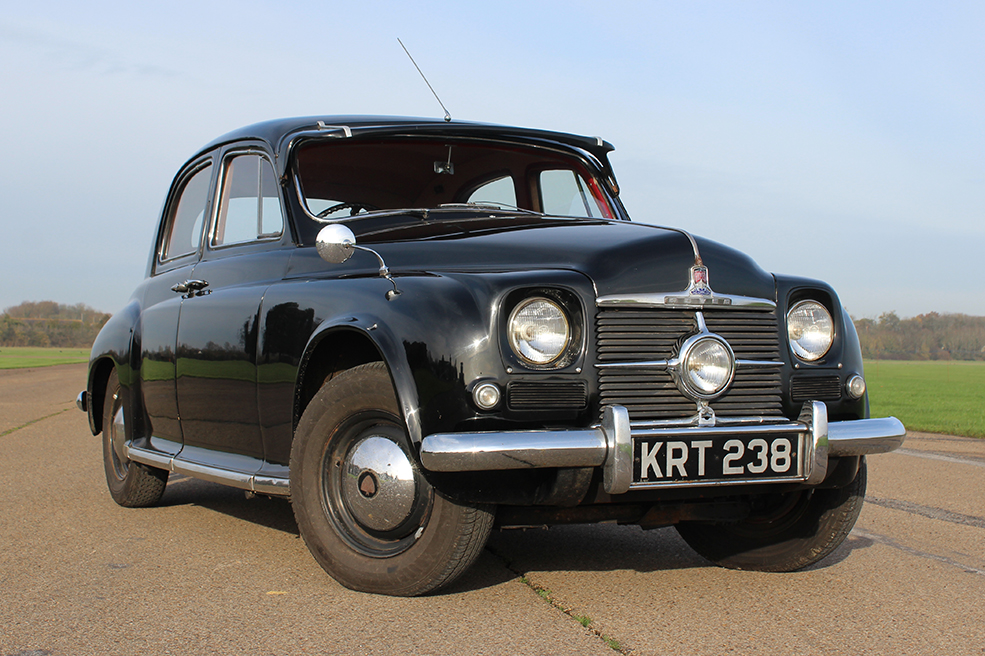
The Rover P4, introduced in 1949, was a forward-thinking design that outshone its contemporaries with innovative features. Born from a collaboration between British and American influences, the P4 became an emblem of sophistication for professional classes like doctors and solicitors.
Initially available only as the 75 model with a single engine option—a 2.1-litre six-cylinder developing 75 horsepower—the Rover P4 quickly gained traction among discerning buyers who valued its craftsmanship over mass-produced alternatives. The car’s unique styling, inspired by Studebaker models, set it apart from other vehicles on the market.
In addition to its striking design, the P4 boasted several groundbreaking features such as a cab-forward layout and a large boot positioned ahead of the rear axle. These innovative elements were not just aesthetic; they also improved practicality and performance, setting new standards for luxury saloons of that era.
As we reported earlier, Rover’s decision to incorporate a freewheel clutch in their P4 models was another nod to engineering ingenuity. This feature allowed drivers to disengage drive once at speed or when the propshaft moved more slowly than the wheels, thus enhancing fuel efficiency without compromising power delivery.
The Rover 75 underwent several revisions over its lifespan. In 1952, the grille design was changed to include conventional slats and remove the central fog lamp. A significant change came in 16 months later when a four-cylinder variant joined the lineup alongside an upgraded six-cylinder engine option.
Rather than focusing solely on performance enhancements, Rover also paid attention to user comfort and ergonomics. The introduction of a curved central gear lever improved the driving experience by simplifying shifts from column-mounted controls—a move that likely appealed to those seeking both style and functionality in their vehicles.
