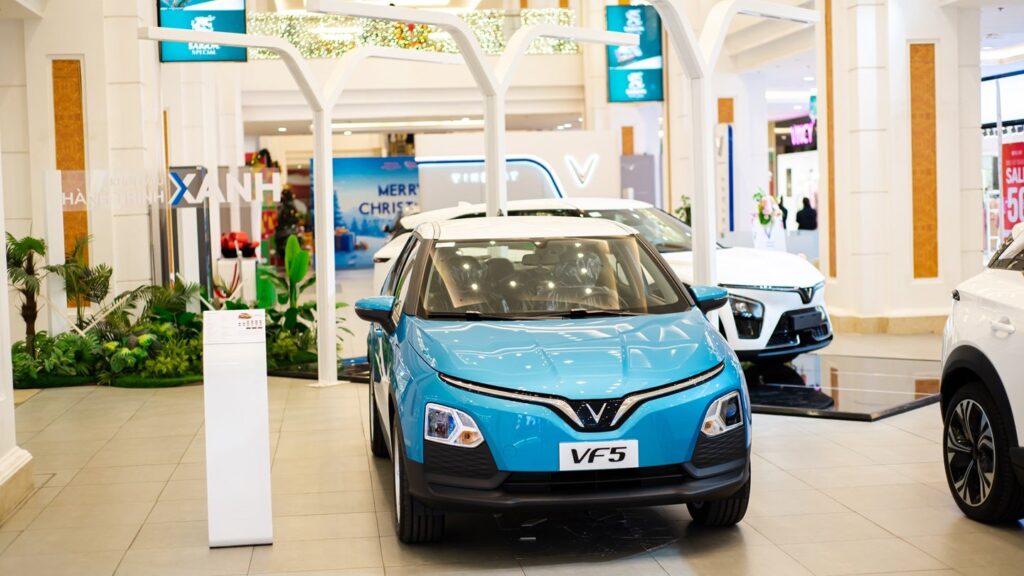
The battery-electric vehicle (BEV) market in Southeast Asia is heating up as governments prepare to roll back incentives, driving manufacturers like Vietnam’s VinFast to step up their game. With 31,000 units of its VF5 model sold in just nine months this year, the company has become a force to reckon with.
Key Takeaways
- VinFast’s VF5 leads ASEAN BEV sales with 31,000 units sold by Q3 2025.
- Governments plan to reduce incentives for EVs starting in 2026, impacting affordability and adoption rates.
- ASEAN countries aim to diversify their energy mixes as part of broader climate change initiatives.
VinFast’s VF5 has captured the imagination of ASEAN drivers by offering a range that rivals many legacy models. Its 400 km (249 miles) on a single charge is impressive, especially considering its price point below $30,000 USD.
But while VinFast leads with volume sales, other manufacturers aren’t standing still. Companies like Proton and Mitsubishi are also ramping up production to meet growing demand for affordable electric vehicles in the region.
The looming rollback of government incentives poses a challenge for both buyers and sellers. Consumers will need to weigh the upfront cost against long-term savings on fuel and maintenance, while manufacturers must find ways to cut costs without compromising quality or performance.
And yet, despite these hurdles, ASEAN’s commitment to reducing carbon emissions remains strong. Countries are investing in renewable energy sources like solar and wind power as part of their national strategies to combat climate change.
Frequently Asked Questions
What does the rollback of government incentives mean for BEV buyers?
The reduction in subsidies will likely increase the initial purchase price of electric vehicles. However, ongoing savings on fuel and maintenance costs can still make EV ownership a smart choice over time.
How are ASEAN countries supporting renewable energy initiatives?
Countries across Southeast Asia are implementing policies to encourage investment in solar, wind, and other clean technologies. This includes tax breaks for companies that produce or use green power sources.
In conclusion, the BEV market in ASEAN is at a pivotal moment. As government incentives begin to fade, manufacturers will need to innovate further to keep electric vehicles competitive with traditional fuel-based cars. It’s an exciting time as we watch how this plays out over the coming years.
