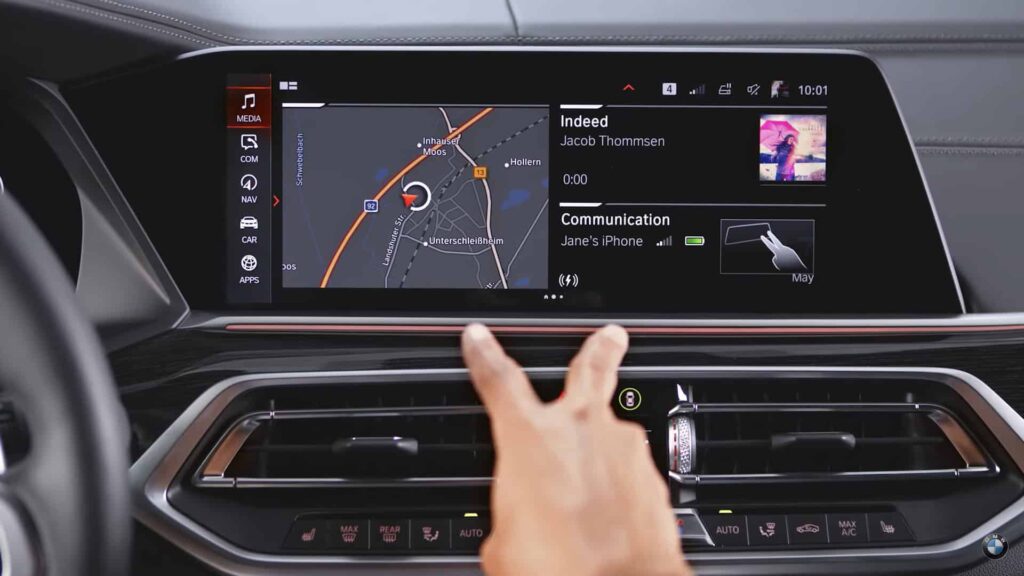
Remember when BMW promised to change how we interact with our cars? The brand introduced its innovative Gesture Control in 2015, promising a hands-free, eyes-on-the-road experience. It was hailed as the future of automotive technology. But after nearly ten years, it’s quietly fading into obscurity. What went wrong?
Key Takeaways
- Drivers found Gesture Control slower and less reliable than traditional controls.
- The system never became easier or more natural to use over time.
- BMW’s internal studies confirmed that most drivers stopped using it after the initial novelty wore off.
Gesture Control debuted on BMW’s G11 7 Series in 2015, offering a futuristic way to control various functions without touching buttons or dials. The idea was simple: make a gesture and let the car do the rest. But as with many tech innovations, the reality fell short of the hype.
The system allowed for basic tasks like adjusting volume, accepting calls, skipping tracks, and rotating camera views. Yet, these gestures required precise movements that were often hard to execute while driving. For instance, changing the volume involved drawing a slow loop in mid-air, which was awkward at best and distracting at worst.
Moreover, the limited set of gestures meant that users had to memorize specific motions for different tasks. This learning curve discouraged many drivers from using the feature regularly. The novelty wore off quickly as people realized how cumbersome it could be compared to simple physical buttons or voice commands.
BMW’s internal studies corroborated what real-world drivers experienced: Gesture Control was less reliable and slower than traditional controls. It often failed to recognize gestures accurately, leading to frustration rather than convenience. As a result, the feature quietly disappeared with the arrival of iDrive X, signaling its failure to win over drivers.
Frequently Asked Questions
Why did BMW’s Gesture Control fail?
Gesture Control failed because it was slower and less reliable than existing controls. It never became easier or more natural to use, leading most drivers to abandon the feature after initial novelty.
What tasks could you perform with BMW’s Gesture Control?
You could adjust volume, accept/reject calls, skip tracks, and rotate camera views. However, these gestures required precise movements that were often impractical while driving.
In the end, BMW’s Gesture Control was a fascinating idea that failed to deliver on its promise of making car interactions more intuitive. While it may have been a fun gimmick for a few years, practicality won out in the long run. As we look towards future automotive technologies, let’s hope they learn from this lesson.
