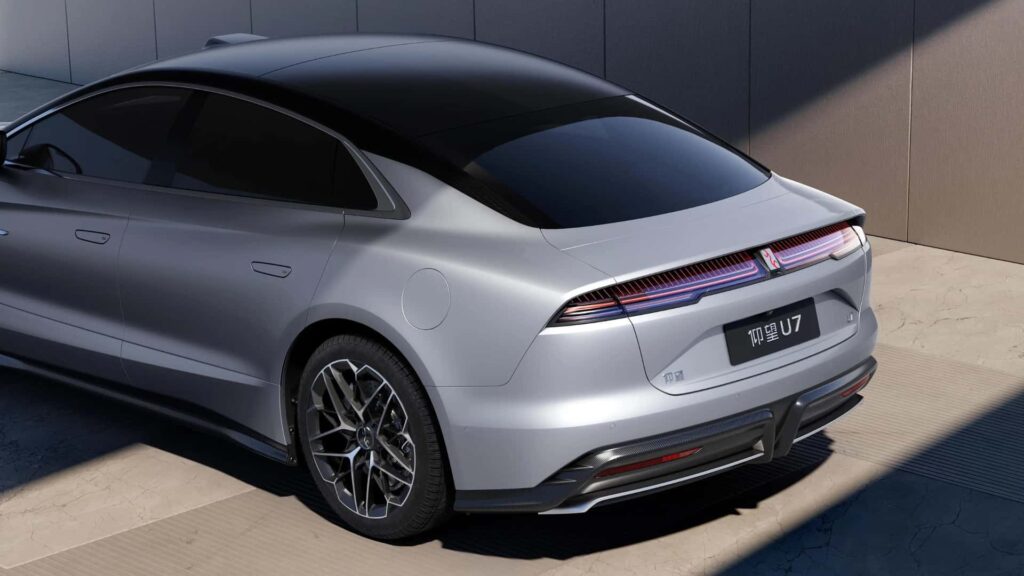
Chinese automaker BYD has unveiled a new 2.0-liter turbocharged boxer engine, marking an unexpected turn in the company’s electrified powertrain strategy. This innovative setup is designed to serve as a range extender for future electric vehicles (EVs) and series hybrids built on its e4 platform.
Key Takeaways
- The 2.0-liter turbocharged boxer engine will act as a generator in BYD’s electrified powertrains, primarily recharging the battery.
- This configuration offers improved driving dynamics due to its low center of gravity and efficient dry-sump lubrication system.
- BYD plans to debut this technology in the Yangwang U7 sedan, which starts at approximately $88,500 for the plug-in version.
The introduction of a boxer engine by BYD is noteworthy given its reputation as an electric vehicle (EV) pioneer. Traditionally associated with brands like Porsche and Subaru, this layout offers several advantages over inline engines. A lower center of gravity enhances handling characteristics, while the dry-sump lubrication system reduces both size and noise levels.
BYD’s new engine is optimized for efficiency in series hybrid configurations, where it serves as a generator to recharge the traction battery under low-load conditions. Interestingly, this unit can also directly power the rear axle when required, delivering 272 horsepower and 280 pound-feet of torque.
Engine noise reduction is another significant achievement: BYD claims that at idle or low load, the engine’s sound level is only 1 decibel higher than an electric motor. This near-silent operation ensures a smooth transition between battery power and internal combustion assistance without disturbing the driver or passengers.
Frequently Asked Questions
Will BYD’s new boxer engine be available in other models besides the Yangwang U7?
BYD has not announced any plans to extend this technology beyond the Yangwang U7 at present, but given its success and potential benefits, it could become a feature across more of their premium lineup.
How does BYD’s boxer engine compare to traditional inline engines used in range extender applications?
The primary advantage lies in the lower center of gravity, which improves vehicle dynamics. Additionally, the dry-sump lubrication system and optimized cooling design contribute to a more compact and quieter setup compared to conventional inline configurations.
BYD’s decision to incorporate a boxer engine into its electrified powertrains represents an intriguing blend of nostalgia and innovation. This move could set new standards for future hybrid systems, combining the best attributes of both worlds—efficiency from electric propulsion and performance from combustion engines.
