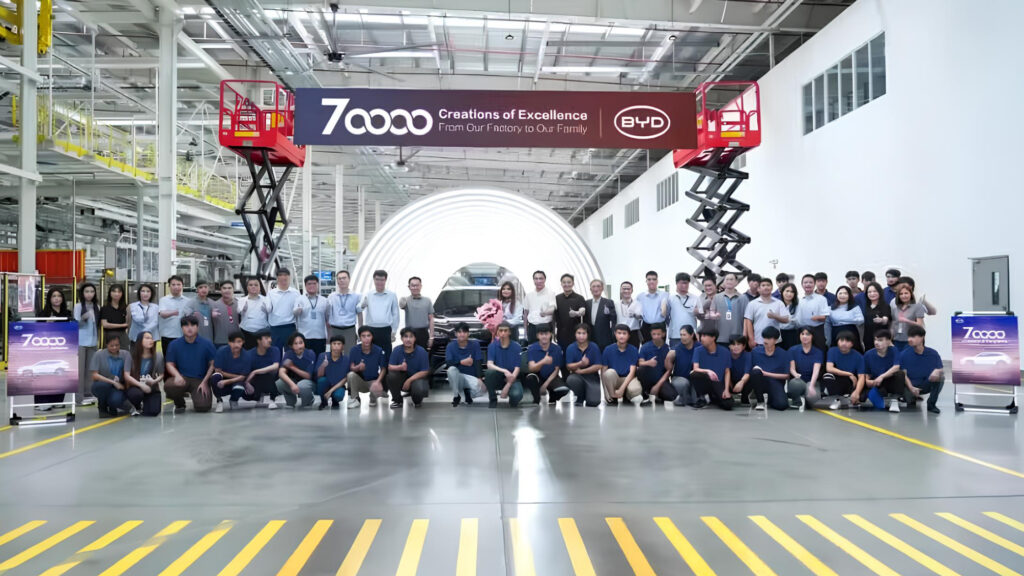
Thai-made BYD cars are rolling off the assembly line at a remarkable pace. The Chinese automaker has hit an impressive milestone with its Rayong-based CKD plant producing 70,000 vehicles since it began operations just over a year ago.
Key Takeaways
- BYD’s Thailand facility reached the production of 70,000 cars in less than one and a half years
- The BYD Sealion 6 DM-i plug-in hybrid SUV marked this milestone as an anniversary car
- BYD exports Thai-made vehicles to Europe and Southeast Asia to avoid additional tariffs from EU countries
BYD’s Rayong plant, which covers a sprawling area of 960,000 square meters, has been cranking out cars at an impressive rate. The facility currently assembles five models: the Atto 3 (Yuan Plus), Dolphin, Seal, Sealion 6 DM-i, and Seal 05 DM-i.
But what’s really exciting is that BYD isn’t just selling these vehicles in Thailand. In August of this year alone, they exported 900 units of the popular BYD Dolphin to Germany, Belgium, and the UK via their Zhengzhou vessel. This strategy helps them dodge those pesky additional EU tariffs.
And let’s not forget about that special anniversary car: the Sealion 6 DM-i plug-in hybrid SUV. It rolled off the production line as a symbol of BYD’s success in Thailand, handed over to one lucky local employee who must have been thrilled!
The Thai market is clearly loving what BYD has on offer. In October this year, they hit another milestone with cumulative deliveries reaching 100,000 vehicles across the country.
Frequently Asked Questions
What models does BYD produce at its Thailand plant?
The Rayong-based factory currently assembles five different models: Atto 3 (Yuan Plus), Dolphin, Seal, Sealion 6 DM-i, and Seal 05 DM-i.
Why does BYD export vehicles made in Thailand?
BYD exports Thai-made cars to avoid additional tariffs imposed by the EU. By shipping from their Rayong plant directly to European markets, they can sidestep a 20.7% tariff on top of an existing 10% customs duty.
This milestone is more than just numbers—it’s about BYD’s growing presence in global markets and its commitment to expanding electric vehicle adoption worldwide.
