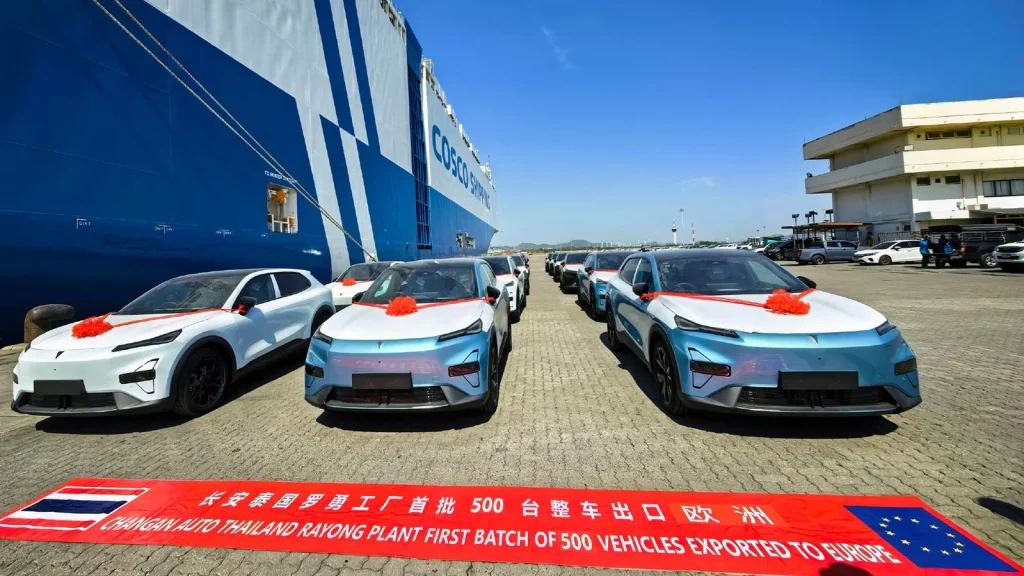
Chinese automaker Changan has shipped its first batch of locally produced Deepal S05 vehicles from Thailand to Europe, marking a significant export milestone for the company. The shipment consists of 500 units and follows similar moves by other Chinese manufacturers like BYD.
Key Takeaways
- Changan’s Rayong plant shipped its first batch of Deepal S05 vehicles to Europe, totaling 500 units.
- The shipment follows similar export moves by other Chinese automakers like BYD and GAC.
- This marks Changan’s expansion into the European market as a key player in electric vehicle production.
Changan’s Rayong plant, which started operations on May 16 this year, is now exporting its first batch of vehicles to Europe. The Deepal S05 SUVs are produced locally and tailored for right-hand-drive markets like the UK and Germany.
The shipment consists of 500 units, a modest start but indicative of Changan’s growing ambitions in overseas markets. This move follows BYD’s earlier shipments from its Thai factory to Europe this summer, highlighting Thailand as an export hub for Chinese automakers.
Changan’s investment in the Rayong plant totals about 10 billion baht ($320 million) with initial annual production capacity set at 100,000 units. The Deepal S05 SUV offers both battery electric vehicle (BEV) and extended-range electric vehicle options.
With Thailand’s strategic location and favorable business environment, Chinese automakers are leveraging the country as a base to export their vehicles globally. This trend is expected to continue with more manufacturers setting up operations in Southeast Asia.
Frequently Asked Questions
How many units did Changan ship?
The initial shipment consists of 500 Deepal S05 SUVs from the Rayong plant to Europe.
What’s the production capacity at Changan’s Thai factory?
The current annual production capacity is set at 100,000 units and will gradually expand to 200,000 units over time.
This shipment marks a pivotal moment for Changan as the company expands its global footprint through exports from Thailand. It’s part of an ongoing trend in which Chinese automakers are establishing production bases overseas to tap into international markets like Europe.
