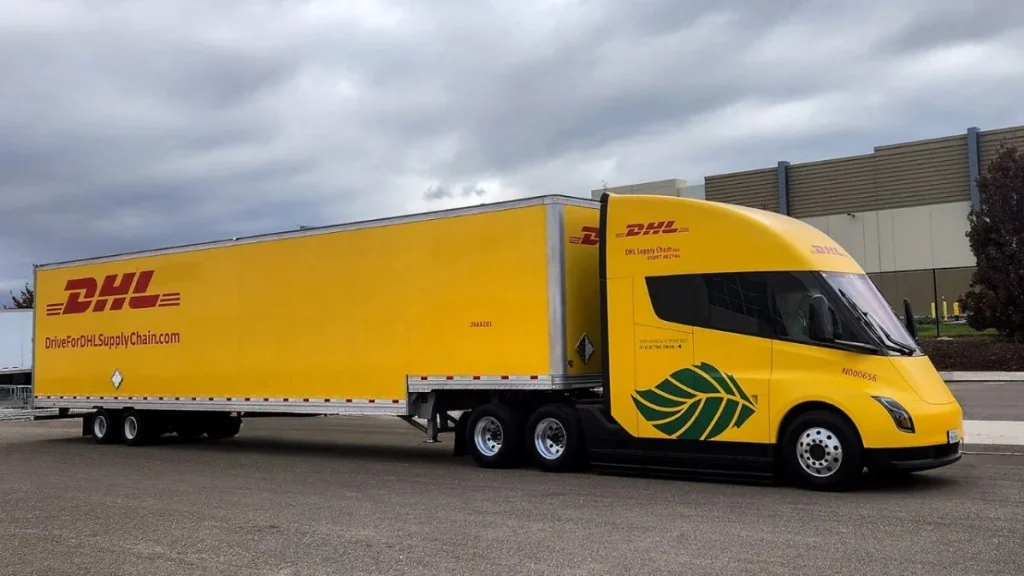
Logistics giant DHL has officially taken delivery of its first Tesla Semi electric truck after a successful two-week trial covering nearly 5,000 kilometers. The Semi averaged an impressive 1 kWh/km during the test runs and showed robust performance even when fully loaded.
Key Takeaways
- DHL’s first Tesla Semi delivery sets a new standard for electric truck efficiency at 1 kWh/km
- Tesla Semi achieved over 600 kilometers in one test with a full load of 34 tonnes, demonstrating its range capabilities.
- The logistics company plans to integrate more Semis into their fleet as part of broader decarbonization efforts.
Jim Monkmeyer, President at DHL Supply Chain North America, praised the truck’s performance and emphasized that it aligns well with the company’s sustainability goals. “The Tesla Semi is not just a step forward; it’s a leap into an electric future for logistics,” he noted.
The Semi has been on trial since 2022 when PepsiCo first started testing the vehicle in deliveries of food and beverages. The truck’s ability to travel over 500 miles on a single charge is particularly noteworthy, as it opens up possibilities that were previously unattainable with electric trucks.
While Tesla’s Semi marks significant progress towards sustainable logistics solutions, it also represents a shift from traditional diesel engines seen in heavy-duty vehicles for decades. The truck’s design and efficiency stand out when compared to its predecessors like the Nikola Tre or even early models of battery-powered delivery vans that struggled with range anxiety.
Frequently Asked Questions
How does Tesla Semi compare in terms of range?
The Tesla Semi can travel up to 800 kilometers on a single charge, which is more than enough for most long-haul routes. This compares favorably with other electric trucks currently available.
What’s the cost compared to diesel alternatives?
The initial investment in Tesla Semi is higher due to its advanced technology and materials, but over time it can save money on fuel costs since electricity is cheaper than diesel. The exact figures vary based on usage patterns.
Tesla’s entry into the commercial vehicle market with the Semi marks a significant moment for both electric vehicles and logistics companies looking to reduce their carbon footprint without compromising performance or efficiency.
