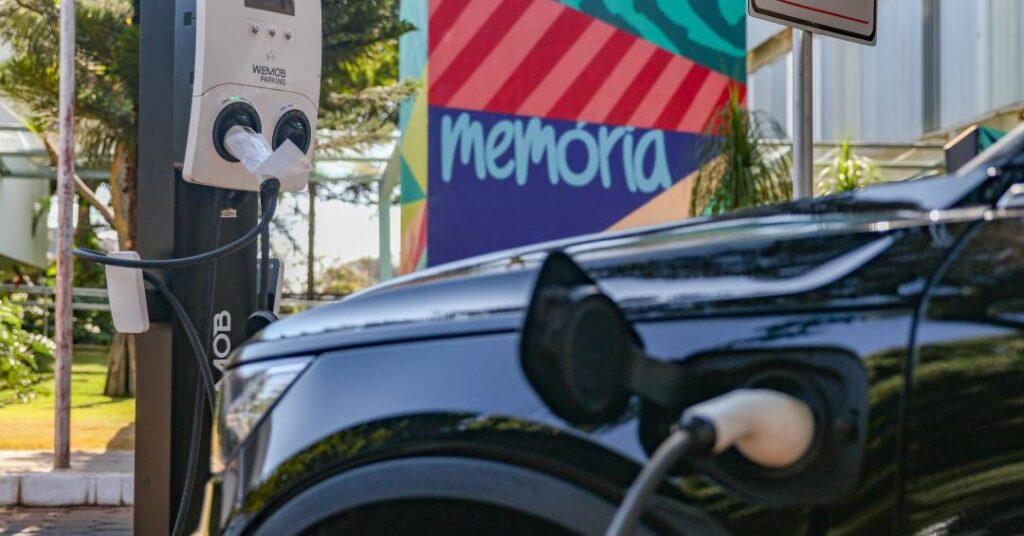
Imagine a future where electric and hybrid cars are the norm on Brazilian roads. A recent study predicts that by 2040, there will be 17.4 million such vehicles in circulation, nearly 44 times more than today’s numbers.
Key Takeaways
- The number of electric and hybrid cars is expected to increase by a whopping 44 times until 2040.
- Hybrid vehicles will make up 72% of this new fleet, with ethanol playing an increasingly important role in both light vehicles and heavy transportation.
- Investments totaling R$25 billion are needed for charging infrastructure alone to support the growth of electric mobility by 2040.
The study shows that while hybrid cars will dominate, ethanol remains a key player. Demand could grow up to 2.4 times as both domestic and international markets expand their use in vehicles and alternative fuel sources like SAF for aviation.
But the shift towards electric mobility won’t be easy or cheap. The report estimates R$25 billion is needed just for charging stations by 2040, emphasizing that government policies will play a crucial role alongside technological advancements to make this transition happen smoothly.
Brazil’s transportation sector also faces challenges in heavy-duty trucks and ships where diesel still reigns supreme. Biometano offers an alternative solution though, with the potential to replace up to 70% of diesel usage through sustainable practices.
Frequently Asked Questions
How much will electric cars dominate by 2040?
The number is expected to increase by a staggering 44 times, with hybrids making up the majority at 72%.
What role does ethanol play in this transition?
Ethanol will continue as an important fuel source, seeing its demand grow significantly for both cars and commercial transport like airplanes and ships.
The road ahead is paved with challenges but also opportunities. As Brazil moves towards a greener future, it’s clear that the next decades won’t just be about electric vehicles; they’ll be about a comprehensive shift in how we power our transportation needs.
