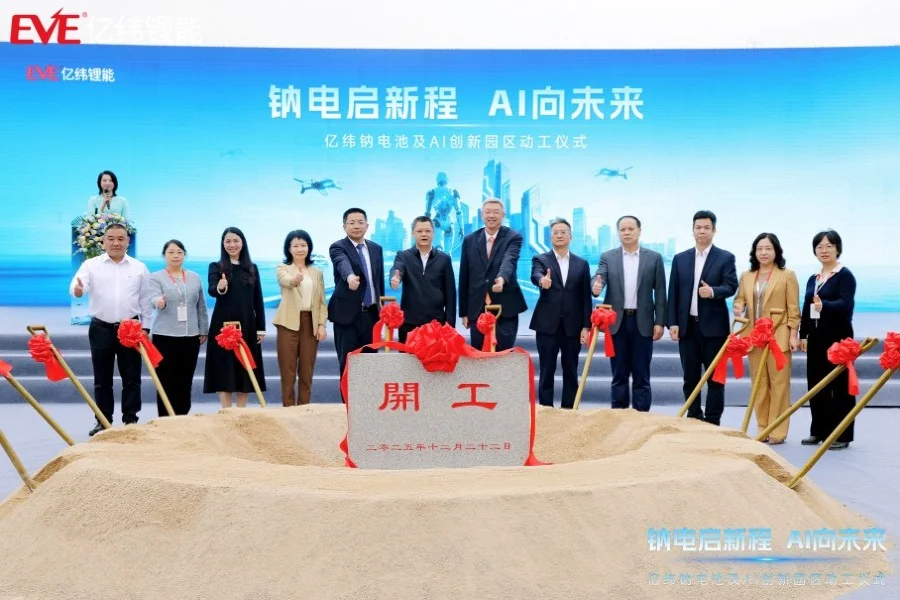
Eve Energy, a leading Chinese battery manufacturer, has started construction on a new sodium-ion battery campus in Huizhou. The facility aims to consolidate research and development with mass manufacturing under one roof.
Key Takeaways
- The 90,000-square-metre site will have an annual production capacity of 2 GWh.
- Eve Energy plans to integrate AI and robotics into the manufacturing process.
- The campus is expected to become a hub for sodium-ion battery industrialization in China.
Construction began on December 22 at Eve’s headquarters. The company invested one billion yuan, about €122 million, to develop this site which will be home to advanced AI and robotics centers as well.
The project reflects a broader industry trend of exploring alternatives to lithium-ion batteries due to the rising costs of lithium. Sodium is more abundant and cheaper than lithium, making it an attractive option for battery manufacturers looking to diversify their offerings.
Despite sodium’s advantages over lithium in terms of cost and availability, there are still technical hurdles to overcome. The energy density of sodium-ion batteries remains lower compared to LFP (lithium iron phosphate) batteries but is improving rapidly with new innovations like CATL’s Naxtra battery achieving 175 Wh/kg.
With lithium prices surging in recent months, the timing for Eve Energy’s investment couldn’t be better. The company aims to capitalize on this trend and establish itself as a leader in sodium-ion technology.
Frequently Asked Questions
How much will the new campus cost?
The investment for Eve Energy’s sodium-ion battery center is one billion yuan, around €122 million euros.
What are some advantages of sodium-ion batteries over lithium-ion ones?
Sodium-ion batteries offer a lower cost and higher availability due to the abundance of sodium compared to lithium. They’re also safer in terms of thermal stability, making them an attractive alternative.
The launch of Eve Energy’s new campus marks a significant step forward for sodium-ion technology in China. As battery costs continue to rise globally, this move could position Chinese manufacturers at the forefront of innovation and production in sustainable energy solutions.
