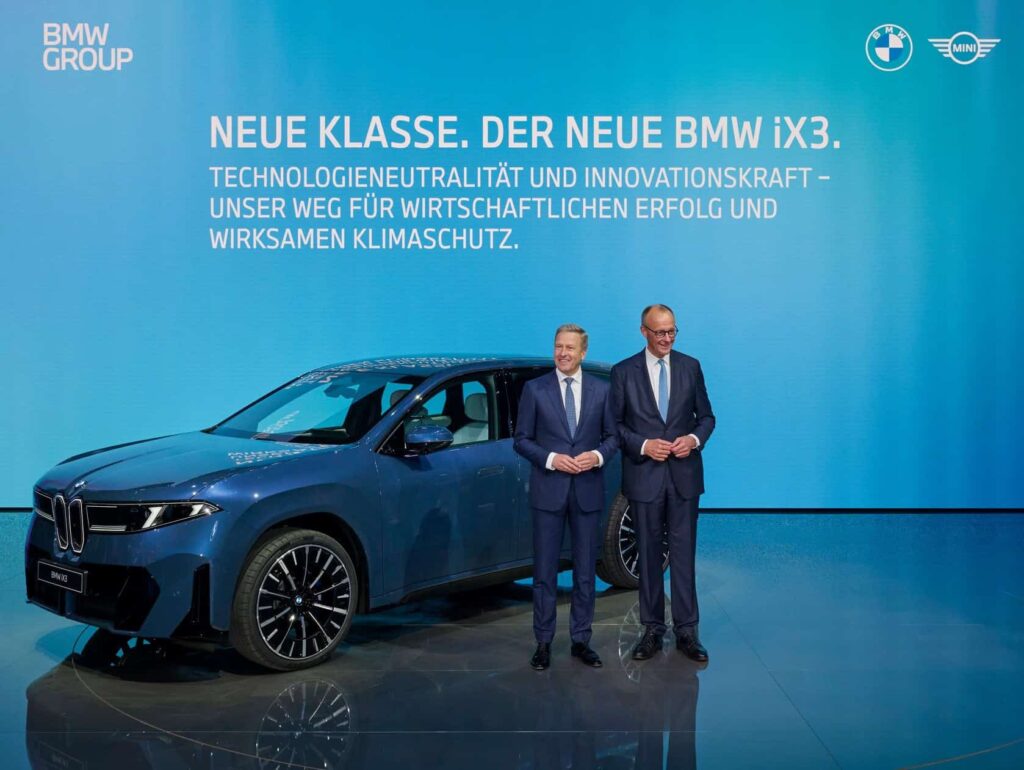
As the European Union gears up to meet its ambitious decarbonization goals, Germany is making waves with a bold move. Chancellor Friedrich Merz has sent a letter to Ursula von der Leyen, President of the European Commission, urging her to reconsider the ban on sales of new combustion-engine cars by 2035. The German leader argues that such stringent measures could harm Europe’s automotive industry and its workers.
Key Takeaways
- German Chancellor Friedrich Merz wants to delay the EU’s ban on new combustion-engine car sales until 2040 or beyond, allowing for plug-in hybrids and highly efficient ICE vehicles to remain on sale.
- The letter highlights concerns about job losses in Europe’s automotive sector if the current plan is not revised.
- Merz advocates for a technology-neutral approach that includes synthetic fuels and renewable energy sources as viable alternatives to electric vehicles.
In his letter, Chancellor Merz emphasizes the need for a more flexible regulatory framework. He believes that the EU’s zero-emission target should be met through various technological pathways rather than solely focusing on battery-electric vehicles (BEVs). This approach would give automakers like BMW and others breathing room to develop alternative technologies such as hydrogen fuel cells and synthetic fuels.
The German Chancellor’s stance is particularly relevant given recent developments in the automotive industry. Many car manufacturers have voiced their concerns over the feasibility of transitioning entirely to electric cars by 2035, citing issues with charging infrastructure and consumer readiness. By proposing a more gradual transition, Merz aims to ensure that Europe’s auto sector remains competitive while still adhering to environmental goals.
Merz also highlights the importance of synthetic fuels as a potential solution for reducing emissions from existing vehicles. These advanced biofuels can be used in current ICE engines with minimal modifications, offering an immediate way to cut carbon dioxide output without requiring extensive infrastructure changes or consumer adoption barriers.
The European Commission is set to meet on December 10th to discuss these concerns and consider potential revisions to the ban. As the debate heats up, stakeholders from across the EU will be watching closely for any signs of compromise that could reshape the future of automotive manufacturing in Europe.
Frequently Asked Questions
What is Chancellor Merz proposing?
Chancellor Friedrich Merz has urged the European Commission to reconsider its plan to ban new combustion-engine car sales by 2035. He suggests allowing plug-in hybrids and highly efficient ICE vehicles to remain on sale beyond this date, advocating for a technology-neutral approach that includes synthetic fuels.
Why is the EU considering such strict regulations?
The European Union aims to reduce carbon emissions significantly by 2050. By banning new ICE vehicles by 2035, it hopes to accelerate the transition towards zero-emission transportation and meet its climate protection goals.
As Europe continues to grapple with balancing environmental sustainability and industrial competitiveness, Chancellor Merz’s proposal could signal a shift in how the automotive industry evolves over the next decade. The coming weeks will be crucial as stakeholders work toward finding common ground that benefits both the environment and European carmakers.
