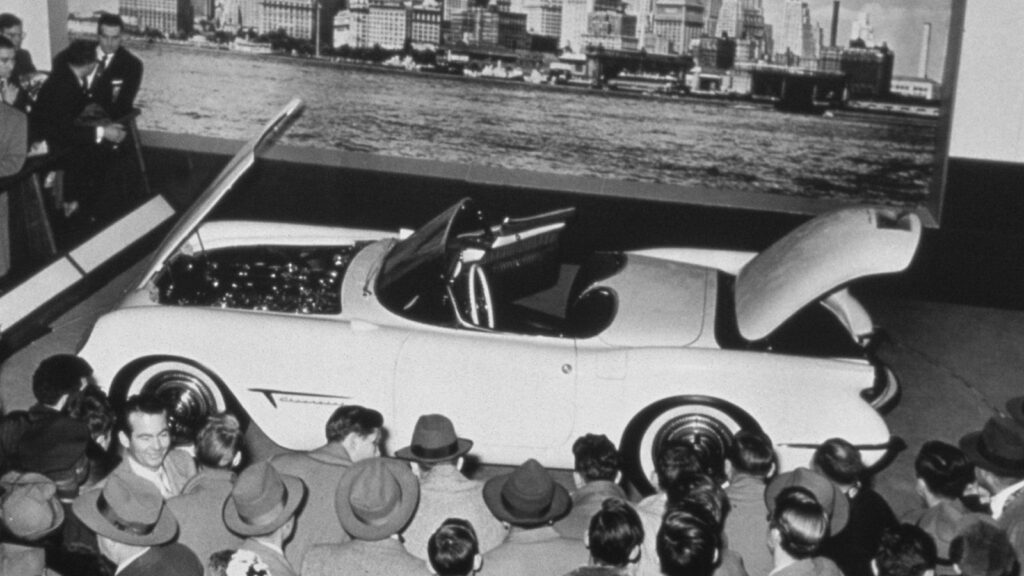
The Chevrolet Corvette, introduced in January 1953 at General Motors’ Motorama show, was a stunning debut that caught everyone’s attention. However, despite its initial promise and unique fiberglass bodywork, the first-year production of just 300 Corvettes faced significant challenges due to its high price tag and limited performance.
Key Takeaways
- The Corvette struggled in its first year with only 195 sold out of 300 produced.
- Ford’s Thunderbird indirectly helped the Corvette by pushing GM to improve and market it better.
- The Corvette saw a dramatic sales increase when new colors were added in 1954, reaching 2,780 buyers.
When the Corvette first hit the market in June 1953, its steep price of $3,498 and lackluster performance made it a tough sell. Only about 60% of the initial production run found homes with enthusiastic car buyers, leaving many wondering if this American sports car was worth the hype.
Enter Ford’s Thunderbird in 1955, which unexpectedly became a savior for the Corvette program. The Thunderbird’s success highlighted the growing demand for luxury sporty cars and forced GM to reevaluate its Corvette strategy. This realization led Chevrolet to improve the Corvette’s offerings and marketing efforts.
By introducing new color options such as Sportsman Red, Pennant Blue, and Black in 1954, sales of the Corvette surged by a whopping 1,290%. The year saw 2,780 buyers embrace the Corvette despite only 3,265 being built. This significant uptick was crucial for Chevrolet to justify continuing the program.
The Corvette’s journey from near extinction to becoming an American icon is a testament to how competition can drive innovation and improvement in automotive design. The story of the Corvette’s survival underscores the importance of adaptability and responsiveness in the car industry.
Frequently Asked Questions
How many Corvettes were sold in 1953?
About 195 Corvettes were sold out of the initial production run of 300 units.
What colors did Chevrolet add to improve Corvette sales in 1954?
New color options included Sportsman Red, Pennant Blue, and Black.
The Corvette’s early struggles highlight the importance of market responsiveness and adaptability. Its survival story is a reminder that even iconic brands can face challenges and need to evolve to stay relevant.
