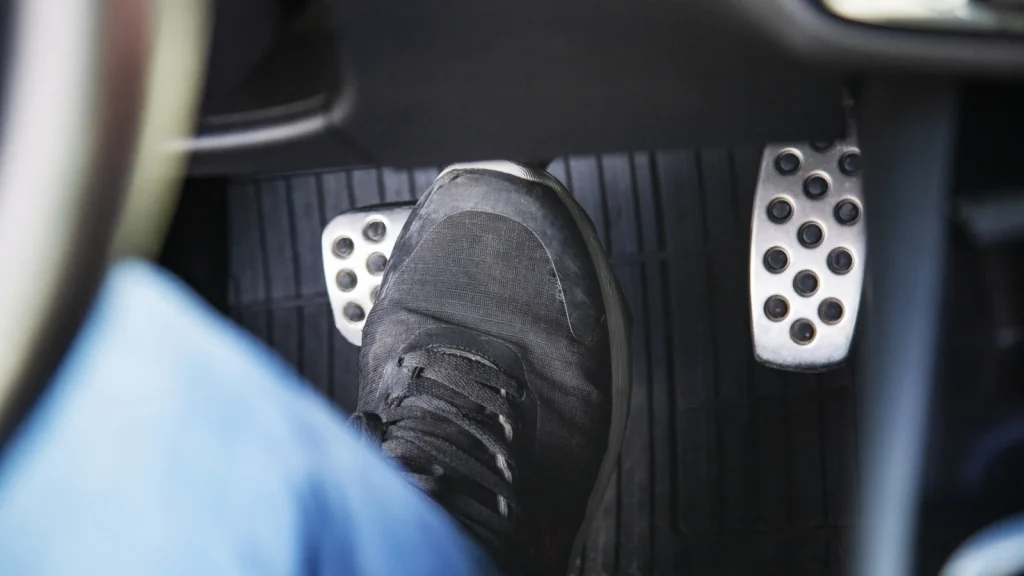
Brake lag, or delayed braking response, can be a serious safety issue for any vehicle. Understanding how to spot brake lag early is crucial in preventing accidents and ensuring your ride remains safe on the road.
Key Takeaways
- Beware of spongy or soft brake pedals that require extra force to engage properly
- Maintain regular service intervals for brake fluid, at least every two years or 30k miles
- Poorly maintained brakes can significantly increase stopping distances and risk levels
When it comes to braking systems in modern cars, the hydraulic setup is designed to be nearly instantaneous. But even these setups are vulnerable to wear and tear over time.
The problem of brake lag isn’t new; older vehicles with mechanical brakes often had noticeable delays due to less efficient fluid lines or worn components. Today’s cars have more advanced systems but still face issues like contaminated brake fluid that can cause significant delays in braking response.
Brake pads and rotors are the most common culprits when it comes to lagging performance, especially if they’re not replaced according to manufacturer recommendations. And while air brakes on large vehicles may take longer due to their design, hydraulic systems should never feel sluggish unless there’s an underlying issue.
To prevent brake lag from becoming a serious safety hazard, regular maintenance is key. Checking your fluid levels and replacing them as needed can make all the difference in how quickly your car responds when you hit the brakes.
Frequently Asked Questions
What causes brake lag?
Lag occurs due to worn components like pads and rotors, contaminated fluid that reduces pressure in the system, or leaks in hydraulic lines. Any of these issues can delay your car’s ability to stop.
How often should I check my brake fluid?
You should have your brake fluid checked at least every two years or 30k miles and replaced if it shows signs of contamination. Regular checks ensure optimal braking performance.
In the end, maintaining a vigilant eye on your vehicle’s brakes can save you from costly repairs and potential accidents down the road. Keep an ear out for any changes in how your car responds to brake input and act accordingly before it turns into a major issue.
