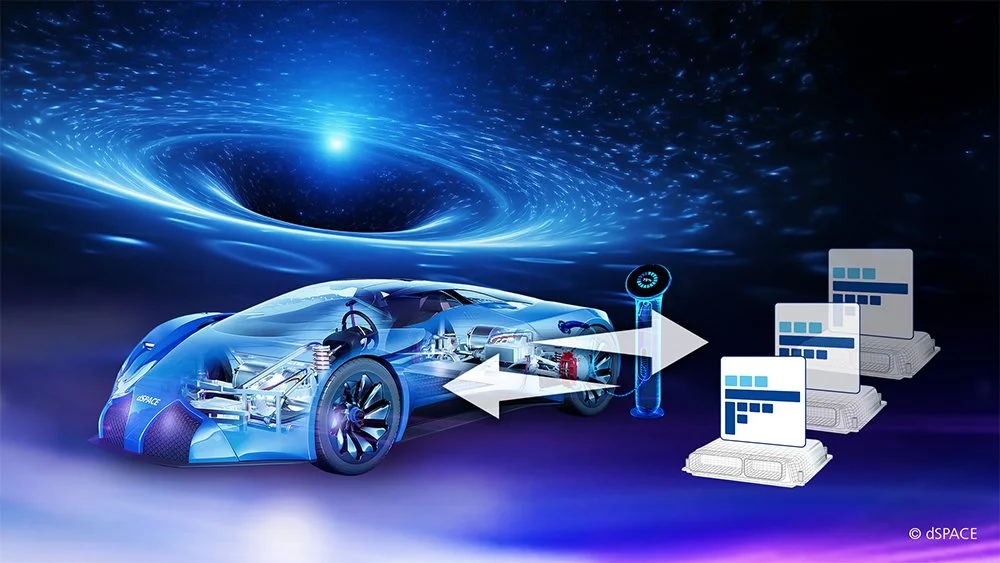
Electric vehicle developers are turning to software-in-the-loop (SIL) testing as a way to speed up innovation and reduce costs. This virtual validation method lets engineers test new features without physical hardware, making the development process faster.
Key Takeaways
- SIL allows early validation of control algorithms for energy management, charging, and thermal systems in BEVs.
- The testing method supports parallel processes, automated regression tests, and integration into CI/CT pipelines.
- New E/E architectures can be integrated more easily with SIL testing compared to traditional methods.
Imagine you’re working on a new electric car model. You want to test how the battery management system works when charging at home or in public stations. With SIL, it’s like having a digital twin of your vehicle that lets you simulate all kinds of scenarios without needing actual cars and chargers.
SIL testing is especially useful for early development phases. It helps catch errors before they become big problems, saving time and money down the line. You can run thousands of test cases at once in virtual environments, which isn’t possible with physical prototypes.
And as vehicles get smarter—with zonal controllers centralizing functions—SIL testing makes it easier to integrate these new architectures without delays or extra costs. This means developers can focus on creating better features and safety measures for electric cars.
Frequently Asked Questions
How does SIL testing help with battery management?
SIL lets you test how the BMS works under different conditions, like charging from a smart home grid or dealing with faulty cells. This ensures that safety and efficiency algorithms are rock solid before real-world tests.
Can SIL testing save money?
Absolutely! By finding issues early in the development process, you avoid costly mistakes later on when physical prototypes or vehicles need to be reworked. It’s like catching a typo while writing an email instead of after it’s been sent.
SIL testing is changing how electric cars are made by making virtual validation part of everyday engineering work. This shift helps bring better, safer EVs to the market faster and at lower costs for everyone involved.
