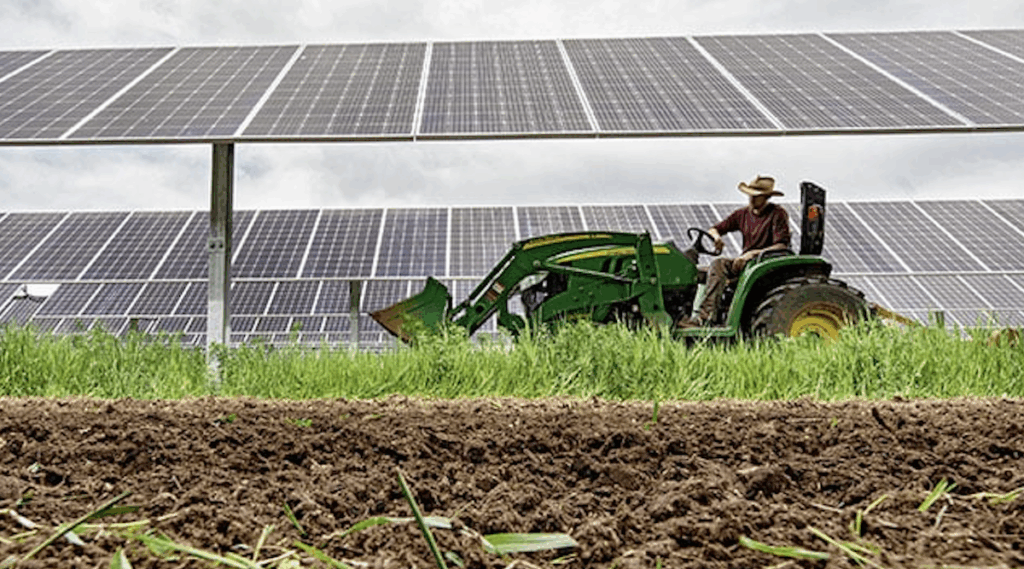
New Jersey has unveiled a pioneering initiative to support farmers by integrating solar energy with agriculture, aiming to provide economic relief in the face of mounting challenges. The program seeks to demonstrate that agrivoltaics, or dual-use solar power systems, can serve as both a sustainable and profitable addition for landowners without disrupting agricultural activities.
Under this innovative approach, known as agrivoltaics, solar panels are strategically placed above farmland to allow crops or livestock grazing beneath them. This method maximizes land use efficiency while generating renewable energy. Early experiments with agrivoltaics have shown positive results in enhancing biodiversity and soil health through practices like pollinator habitat restoration and vegetation management.
The New Jersey pilot program stands out due to its focus on integrating sheep grazing under solar arrays, which not only offers a cost-effective solution for maintaining the land but also contributes to improved fodder quality for livestock. Moreover, this dual-use model presents an opportunity for farmers to diversify their income streams by leveraging unused space on their properties.
Despite the promising outcomes from early adopters of agrivoltaics, broader adoption remains contingent upon further research and evidence demonstrating clear economic benefits over traditional land use methods. In New Jersey, where agricultural plots are often smaller than in other states, maximizing every inch of available land for multiple purposes could be crucial.
As environmental concerns grow alongside financial pressures on farmers, initiatives like the one launched by New Jersey represent a forward-thinking approach to sustainable agriculture and renewable energy generation. This project aims to set an example that could inspire similar efforts across the country, potentially reshaping how rural landscapes are used for both farming and energy production.
