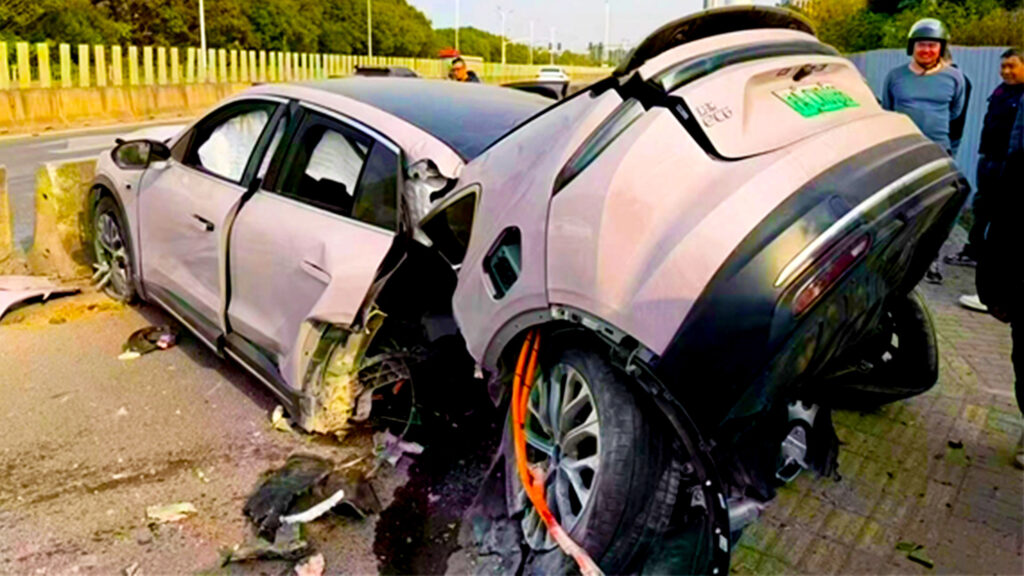
A Nio EC6 electric vehicle was involved in a severe crash in Shanghai, splitting open like a can of tuna after hitting a concrete barrier side-on. Despite the car’s catastrophic damage and its violent impact, neither the driver nor passenger sustained injuries.
Key Takeaways
- The Nio EC6 was destroyed in a crash but didn’t catch fire or injure anyone.
- Nio staff were alerted immediately and helped evacuate the occupants safely.
- The car’s battery pack survived without thermal issues, highlighting its robust safety features.
On Monday afternoon, an incident occurred where a pink-colored Nio EC6 struck a concrete barrier after another vehicle cut in front of it. The force applied to the C-pillar and floor area caused extensive damage, splitting the car through the rear. Remarkably, both occupants escaped without injury.
The onboard safety systems immediately sent alerts to Nio’s staff who arrived promptly on scene to assist with medical treatment for the passengers. According to a statement by Nio, the doors unlocked automatically after impact, facilitating safe evacuation.
Local reports indicate that despite splitting almost in half and sustaining significant damage, there was no fire or thermal issues involving the battery pack. This outcome stands out against common concerns about EV fires following minor accidents.
The EC6 model involved is from a recent update series launched earlier this year with either 75 kWh or 100 kWh batteries available in dual-motor configurations producing up to 483 hp and 516 lb-ft of torque. Nio emphasized that the driving assistance system was disabled during the crash.
Frequently Asked Questions
Was anyone injured in this incident?
No injuries were reported for either occupant despite the car’s extensive damage.
Did the battery catch fire or experience thermal issues?
The battery pack remained intact and did not suffer from any fires or overheating problems.
This event highlights advancements in EV safety systems, demonstrating their effectiveness even under extreme conditions. It also underscores ongoing concerns about vehicle stability during high-impact collisions.
