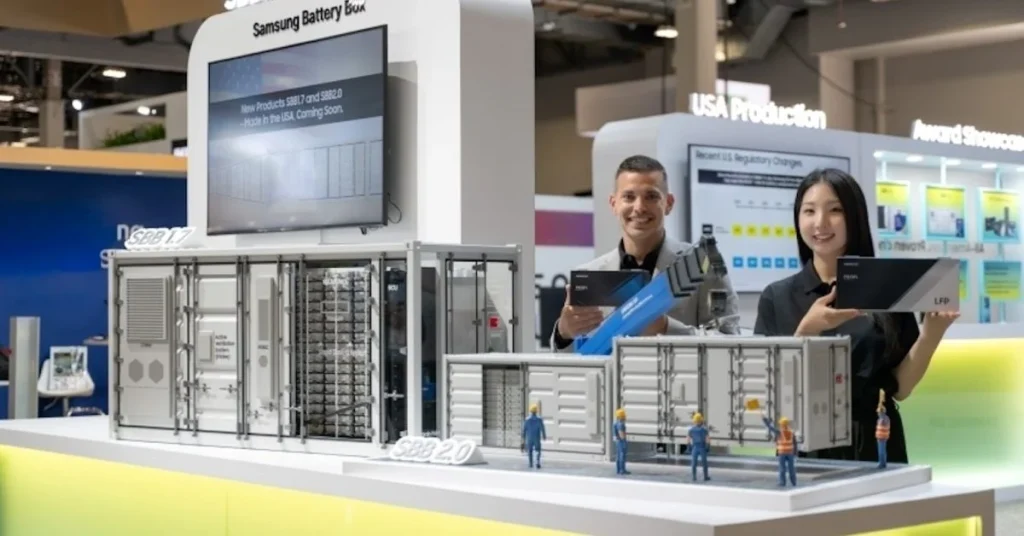
Samsung SDI is making a big move by switching its focus from electric vehicle batteries to energy storage systems (ESS) for the U.S. market, thanks to a new contract worth over $1.35 billion.
Key Takeaways
- Samsung SDI will produce prismatic lithium iron phosphate (LFP) batteries in Indiana starting 2027 for ESS units, not EVs anymore.
- The company’s SBB 2.0 container system promises high performance and safety at a competitive price point.
- As the only non-Chinese manufacturer of prismatic LFP cells currently operating in the U.S., Samsung SDI aims to capture more market share.
Samsung SDI’s new strategy isn’t just about following trends; it’s also responding to customer needs. The company sees an opportunity to help utilities and data centers stabilize power supplies, especially as renewable energy grows.
With its SBB 2.0 system, Samsung is offering a solution that can be easily deployed in standard containers, making installation simpler for customers who want reliable storage without the hassle of complex setups. The rigid aluminum housing makes these batteries safer and more durable too.
The move away from EVs to ESS isn’t just about market demand; it’s also strategic positioning. By focusing on energy storage, Samsung SDI can carve out a niche in an expanding sector where safety is paramount—especially for utilities that need reliable systems to manage fluctuating power demands.
But why choose prismatic LFP over other battery types? It’s all about balancing performance with cost and safety. These batteries are less prone to overheating, which means fewer worries about fires or malfunctions in large-scale installations.
Frequently Asked Questions
Will Samsung SDI’s ESS be affordable?
Absolutely. The company emphasizes price competitiveness, making its batteries an attractive option for those looking to stabilize power supplies without breaking the bank.
How does this affect EV battery production in Indiana?
The shift means that some of Samsung SDI’s current EV battery lines will be repurposed or shut down by 2027, focusing instead on energy storage solutions for utilities and data centers.
This strategic pivot shows how companies are adapting to changing market demands. As renewable energy becomes more prevalent, the need for reliable ESS is growing—and Samsung SDI aims to be at the forefront of this trend.
