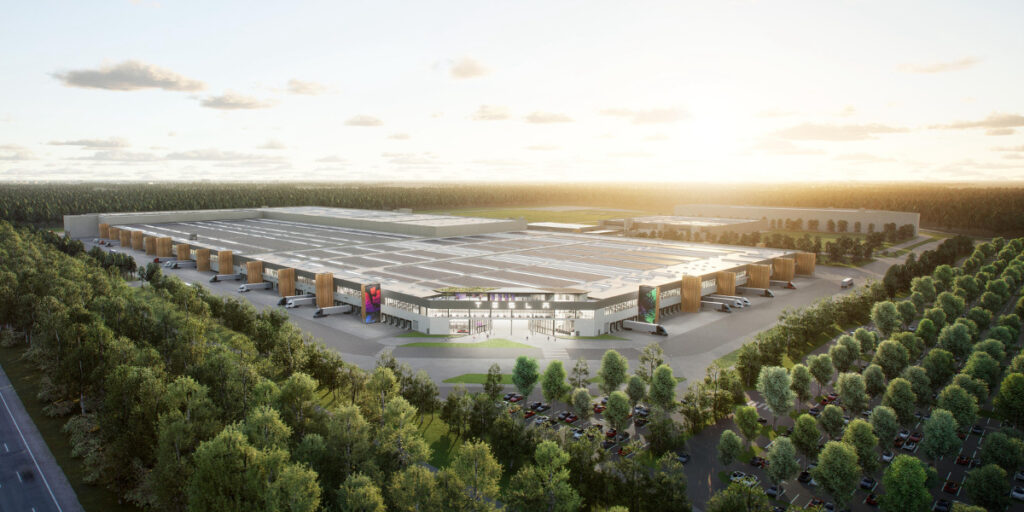
Tesla has recently increased production at its Giga Berlin factory by switching to two full shifts per day for the Model Y, a move that reflects growing demand and changing market dynamics. The factory’s output adjustments over the past year highlight both challenges and opportunities faced by Tesla in Europe.
Key Takeaways
- Tesla has returned to two full production shifts at its German plant for Model Y vehicles.
- The shift change is due to increased demand, especially from markets like Canada where US-made models face tariffs.
- Giga Berlin now supplies electric crossovers to over 30 international markets, with a positive trend observed.
According to André Thierig, the factory manager at Giga Berlin, Tesla transitioned back to two full production shifts in September. This adjustment follows a period of reduced production due to lower demand for Germany-produced Model Ys compared to early 2023 when three shifts were operational.
The decision to ramp up production is partly driven by the introduction of new variants, including a more affordable Standard version that has boosted sales figures. However, the primary driver appears to be strategic changes in Tesla’s supply chain, with German-made Model Ys being exported to markets like Canada where US-produced models face significant import tariffs.
Despite these positive trends, it is important to note that Giga Berlin does not cater to Tesla’s two largest markets: the USA and China. Therefore, while demand for European-manufactured vehicles has improved, a clear picture of global consumer trends remains elusive. Analysts will be watching closely as more data becomes available in the coming weeks.
Furthermore, Thierig emphasized that further production increases are on the horizon to meet growing demand and accommodate new model variants. This expansion underscores Tesla’s commitment to maintaining its competitive edge in Europe despite ongoing challenges such as the tariff war with the US.
Frequently Asked Questions
Why did Tesla reduce production at Giga Berlin before?
Tesla had reduced production to less than two shifts per day due to a drop in demand for Germany-produced Model Ys, particularly affecting exports to the US.
How does the tariff war impact Tesla’s supply chain?
The tariff war has made it more cost-effective for Tesla to send German-made Model Ys to markets like Canada instead of US-produced models, which face additional import duties.
In conclusion, while Tesla’s recent production boost at Giga Berlin signals a positive trend in demand and supply chain efficiency, the company continues to navigate complex market conditions. This move reflects both strategic adjustments and an evolving landscape for electric vehicle manufacturers operating across international borders.
