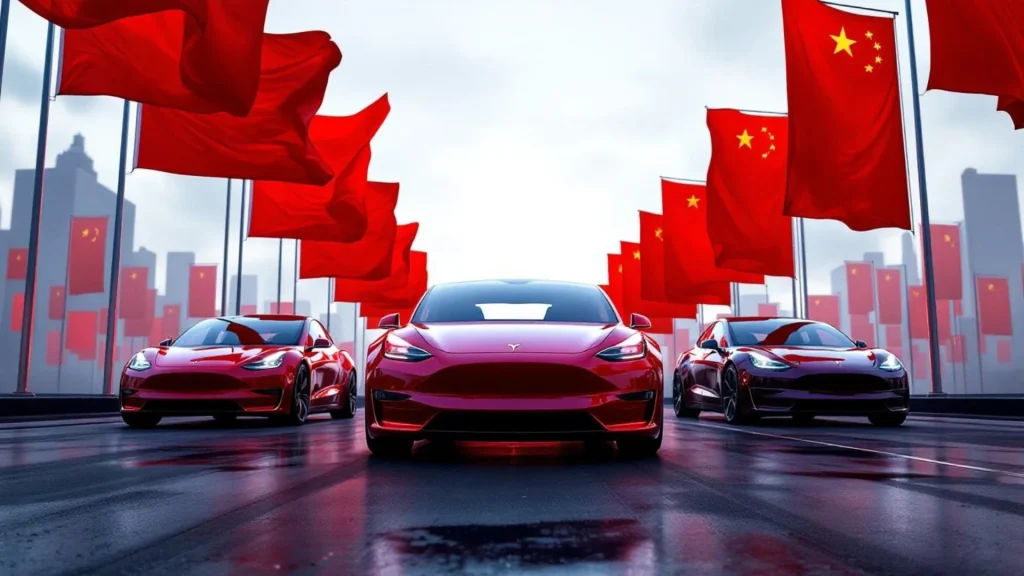
Tesla saw its sales in China fall to their lowest point in three years during October, raising significant concerns about potential full-year declines. The company sold only 26,006 vehicles last month compared to previous quarters, marking the smallest number of units since Q4 2022. This downturn comes amid intense competition from Chinese EV makers like NIO and Li Auto.
According to industry experts, Tesla’s market share in China dropped significantly—from 8.7% in September to just 3.2% in October. Michael Dunne, CEO of Dunne Insights, commented on the situation: “Tesla is getting surrounded by a swarm of Chinese automakers… each taking some sales from the company with a target on its back.” As we reported earlier this year, Xiaomi’s entry into the EV market has posed another challenge for Tesla, as their YU7 SUV and SU7 sedan are performing exceptionally well in China despite initial safety concerns.
The economic slowdown coupled with a price war has also played a major role in Tesla’s declining sales figures. Local competitors like Leapmotor have emerged to cater specifically to the Chinese market’s demands, offering more affordable EVs that compete directly with Tesla’s Model 3 and Model Y. Our previous analysis on Xiaomi revealed how quickly they managed to establish themselves as a serious competitor, selling nearly 109,000 cars in Q3 alone, significantly less than Tesla but impressive nonetheless.
Tesla’s struggles this year highlight the rapidly changing dynamics within the Chinese EV market. While competitors are expanding their range of models and lowering prices, Tesla is grappling with how to remain competitive while maintaining its brand image and premium positioning. The company will need to adapt quickly if it hopes to regain its footing in one of the world’s largest auto markets.
China’s burgeoning electric vehicle industry continues to surprise everyone with new entrants like Xiaomi entering the scene, as well as existing players improving their offerings rapidly. This trend is likely to continue throughout 2026 and beyond, further challenging established names such as Tesla.
