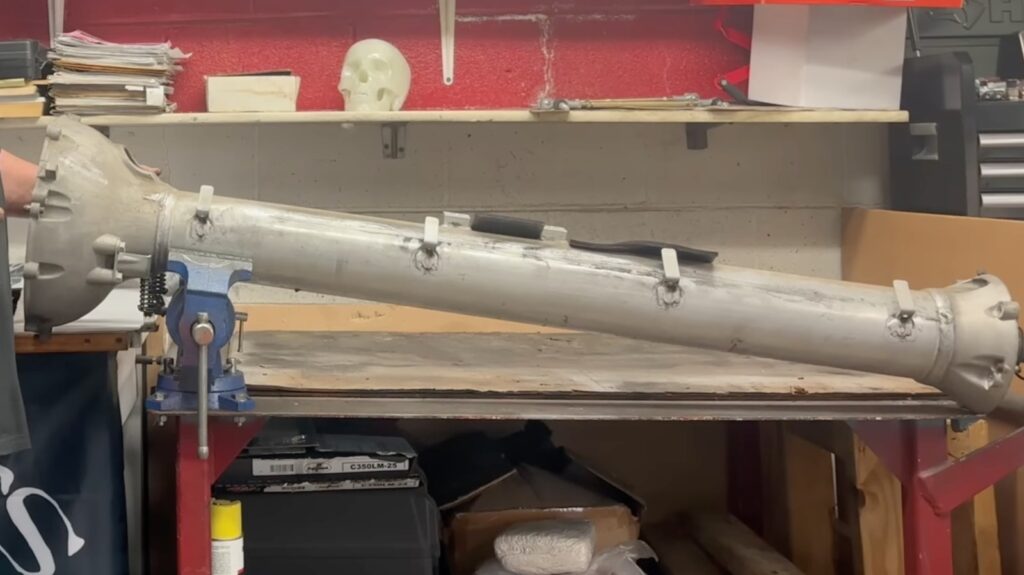
The Chevrolet Corvette has long been synonymous with American sports car engineering, boasting innovative features like the torque tube since its introduction. This unique component plays a crucial role in enhancing both performance and structural integrity of the vehicle, setting it apart from conventional rear-wheel drive designs.
Key Takeaways
- Torque tubes efficiently transfer power from the engine to the wheels, improving drivetrain efficiency.
- The design enhances overall chassis rigidity and handling characteristics in sports cars like the Corvette.
- While beneficial for front-engine, rear-wheel drive configurations, the torque tube is absent in the mid-engined C8 model due to its unique layout.
In a traditional drivetrain setup, a driveshaft connects the transmission to the differential, allowing power transfer through universal joints that accommodate suspension movement. However, this system introduces additional complexity and potential for inefficiency. The torque tube design simplifies this by integrating the driveshaft into a rigid tubular housing directly connected between the engine and rear axle.
This integration not only reduces mechanical losses but also improves structural rigidity of the chassis. By minimizing flex in the drivetrain, the torque tube enhances overall vehicle dynamics, contributing to better handling and responsiveness. This is particularly advantageous for high-performance vehicles like the Corvette, where precise control and stability are paramount.
Historically, the torque tube was a hallmark feature of classic Corvettes from the C2 generation onwards. It allowed GM engineers to achieve superior power delivery while maintaining a compact engine bay layout. However, with the transition to the mid-engine architecture in the C8 Corvette, this iconic design element has been phased out due to the inherent benefits and packaging advantages of the new configuration.
The torque tube’s role is not just about mechanical efficiency; it also significantly impacts vehicle dynamics by reducing unwanted vibrations and improving overall rigidity. This results in a more stable platform for high-speed driving and aggressive cornering maneuvers, attributes that are highly valued in sports car enthusiasts.
Frequently Asked Questions
Why did the C8 Corvette abandon the torque tube?
The mid-engine layout of the C8 model necessitated a redesign of its drivetrain to optimize space and balance. The absence of a front-mounted engine eliminated the need for a torque tube, as it was primarily beneficial in traditional rear-wheel drive configurations.
How does the torque tube affect performance?
The torque tube improves mechanical efficiency by reducing power loss and enhancing chassis rigidity. This leads to better handling characteristics, reduced vibrations, and overall improved driving dynamics, especially beneficial in high-performance applications like the Corvette.
In conclusion, the torque tube remains a testament to Chevrolet’s engineering ingenuity and its commitment to pushing the boundaries of automotive design. While it may no longer be a feature in the latest generation of Corvettes, its legacy continues to influence discussions around drivetrain efficiency and performance optimization.
