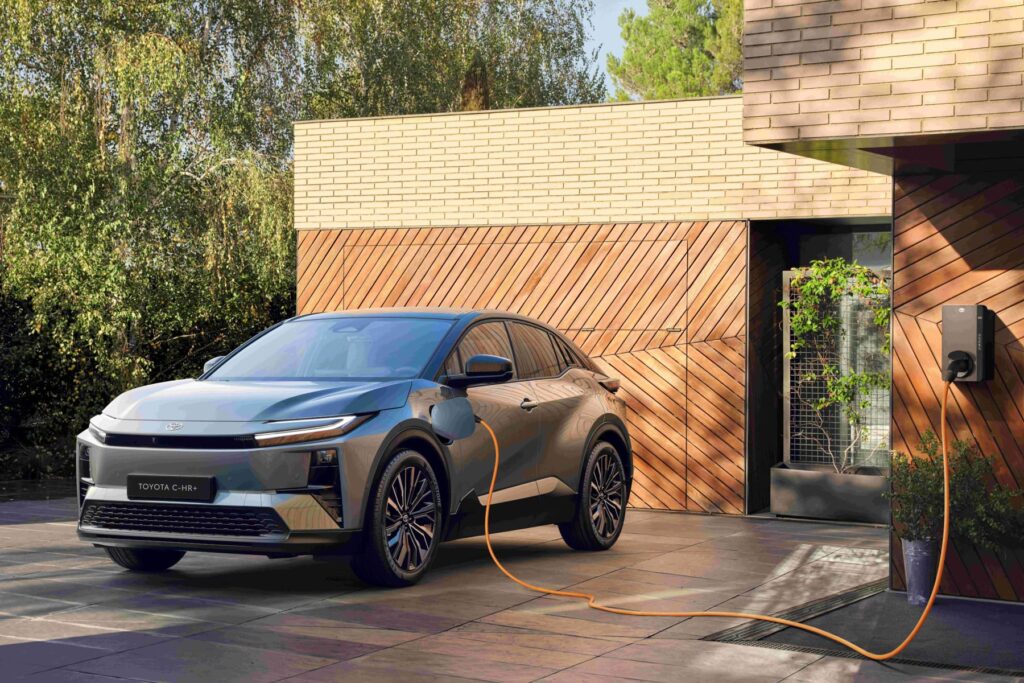
Japanese automaker Toyota has entered strategic partnerships with several energy providers across Europe to offer intelligent energy solutions for electric vehicle (EV) and plug-in hybrid charging. The initiative includes Vehicle-to-Grid (V2G) technology, aiming to provide seamless home, workplace, and public charging options.
Key Takeaways
- Toyota collaborates with energy providers in Germany and the UK for EV charging solutions.
- The partnership focuses on Demand Side Response (DSR) solutions to be introduced from 2026, offering customers lower electricity costs through smart charging.
- Toyota plans to expand its energy cooperation to other European countries and introduce advanced V2G integration in the future.
Toyota’s partnerships with The Mobility House Energy in Germany and British Gas in the UK will offer a range of services, including lower electricity costs through smart charging that prioritizes off-peak hours. Additionally, customers can benefit from financial incentives for participating in grid stabilization programs.
The initiative aims to provide environmental benefits by shifting EV charging times to periods when renewable energy is most abundant. Toyota’s DSR solutions are set to launch in both countries starting 2026, offering various direct customer advantages such as cost savings and enhanced convenience through app-based control.
Toyota plans to integrate Vehicle-to-Grid (V2G) technology into its European operations, enabling vehicles to feed power back into the grid. However, specific details on the rollout of V2G in other countries or exact dates have not been disclosed yet.
Frequently Asked Questions
When will Toyota’s Demand Side Response solutions be available?
Toyota’s DSR solutions are scheduled to launch in Germany and the UK starting 2026.
Will other European countries benefit from these partnerships?
Toyota plans to expand its energy cooperation to additional European countries but has not specified which ones or when.
The strategic alliances aim to create a unique value proposition by combining Toyota’s mobility expertise with the capabilities of the energy sector in network flexibility, integration of renewable energies, and digital energy services. This collaboration is expected to enhance customer benefits while contributing to sustainable practices.
