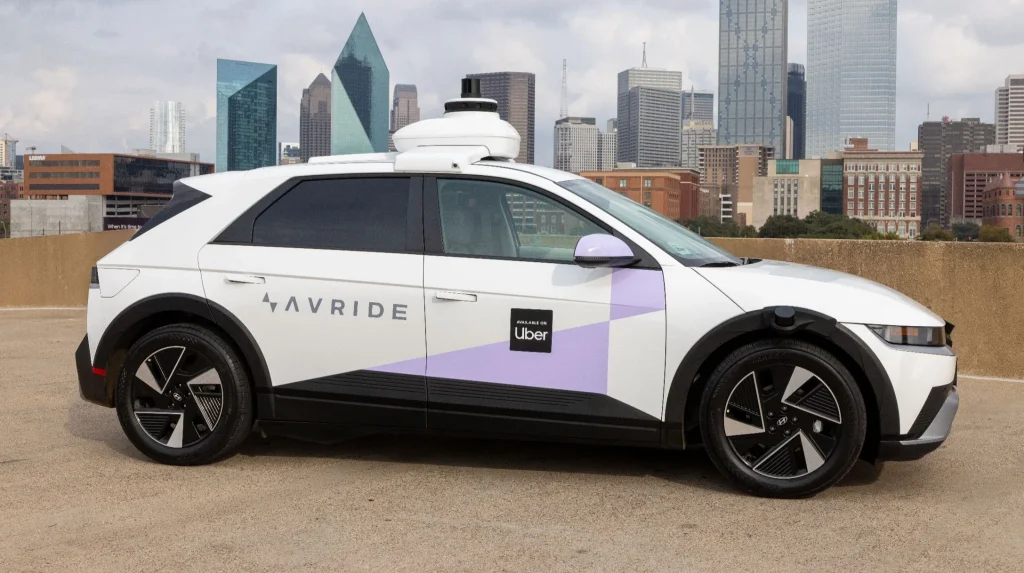
Uber has introduced its first robotaxi service in partnership with Avride, making fully autonomous rides available across a significant portion of downtown Dallas. The fleet will initially include safety drivers but plans call for driverless operation soon.
Key Takeaways
- Dallas riders can now access robotaxis through the Uber app at no extra cost.
- The initial rollout covers a 23-kilometer area, with plans to expand further.
- An onboard specialist will monitor operations during early testing phases before full autonomy is achieved.
With this launch, Dallas joins cities like Phoenix and Pittsburgh where Uber has tested autonomous vehicles in the past. However, unlike previous models that relied on a mix of sensors and GPS data for navigation, Avride’s robotaxis use advanced AI algorithms to understand their environment more comprehensively. They’re designed to operate entirely without human intervention once testing is complete.
Uber’s move into full autonomy comes as other tech giants like Wayve are developing new technologies that could change the game in autonomous driving validation processes. But for now, Avride and Uber are focusing on proving their system works safely within a controlled area of Dallas.
The robotaxis feature an array of sensors including LiDAR units, radar systems, and high-resolution cameras to detect objects around them. These vehicles can navigate complex urban environments much like the early self-driving prototypes from Google’s Waymo but with improved reliability due to advancements in AI and machine learning.
Frequently Asked Questions
How does this impact traditional taxi services?
The introduction of robotaxis won’t immediately replace human-driven taxis, but it sets the stage for a shift towards more automated transportation options over time. Traditional drivers will still play an important role while autonomous technology matures.
What happens if there’s a technical issue?
If any problems arise during testing phases, riders can contact Uber support through the app or by phone to report issues and get assistance. Onboard specialists will also be available to address immediate concerns on site.
This launch represents a significant step forward in urban mobility solutions but it’s clear that widespread adoption of fully autonomous vehicles is still some years away as companies continue refining their technology.
