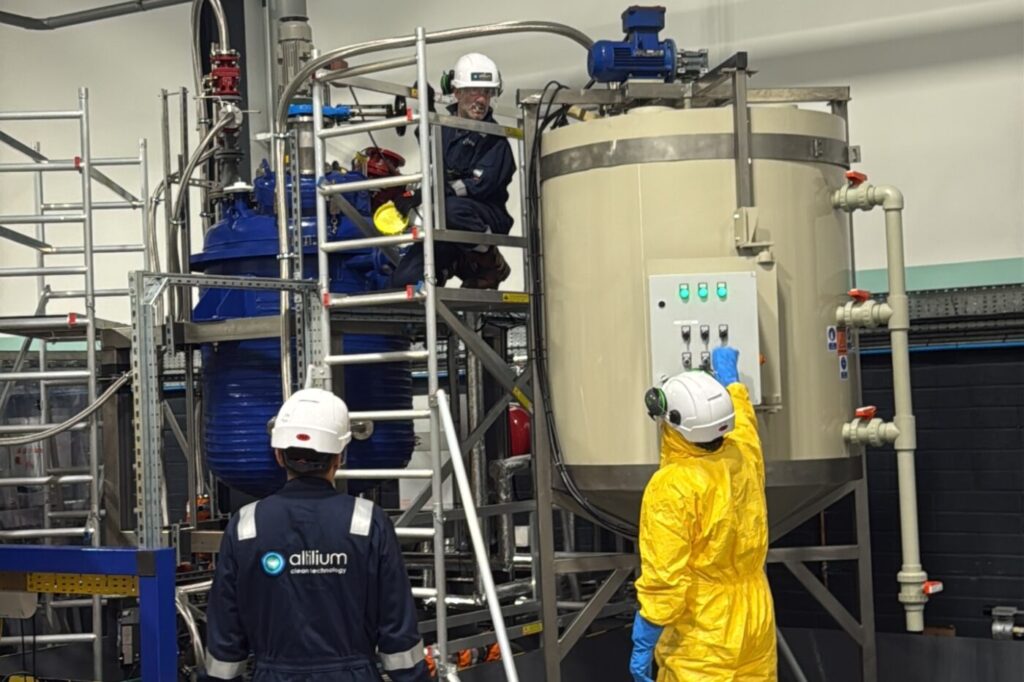
Altilium has received a significant boost from the UK government, securing funding to validate battery cells made with recycled materials for electric vehicles (EVs). This project aims to show how using recycled anode and cathode materials can be commercially viable while reducing carbon emissions. The company’s EcoAnode and EcoCathode processes are at the heart of this initiative.
Altilium’s proprietary EcoCathode process boasts impressive recovery rates for critical raw materials like lithium, nickel, and cobalt, exceeding 95%. This not only ensures high purity but also consistency in manufacturing cathode materials. The project builds on previous successes, such as the showcase of automotive-grade multilayer pouch cells at Cenex Expo 2025.
At this event, Altilium and Jaguar Land Rover (JLR) presented the UK’s first EV battery cells made with recycled cathode and anode materials. These cells were produced using cathode active material recovered from end-of-life electric vehicle batteries at Altilium’s Devon facility. This collaboration highlights the potential for recycling in reducing dependence on imported raw materials.
The project also supports the UK’s Critical Minerals Strategy, which aims to produce 10% of national mineral demand domestically and at least 50,000 tonnes of lithium by 2035. As new EU Battery Regulations mandate minimum thresholds for recycled content in EV batteries, Altilium’s work is particularly timely.
Altilium’s ACT 2 facility in Plymouth serves as the UK’s first commercial EV battery recycling site, and the upcoming ACT 3 plant will recover battery minerals from up to 24,000 vehicles annually. This scaling of operations underscores the company’s commitment to sustainability and reducing environmental impact.
With these advancements, Altilium is paving the way for a more sustainable future in EV manufacturing. The project not only aims to demonstrate commercial viability but also to provide evidence of carbon-saving potential within the UK automotive value chain. As we move towards an era where recycled materials play a crucial role in battery production, Altilium’s efforts are set to make a significant impact.
