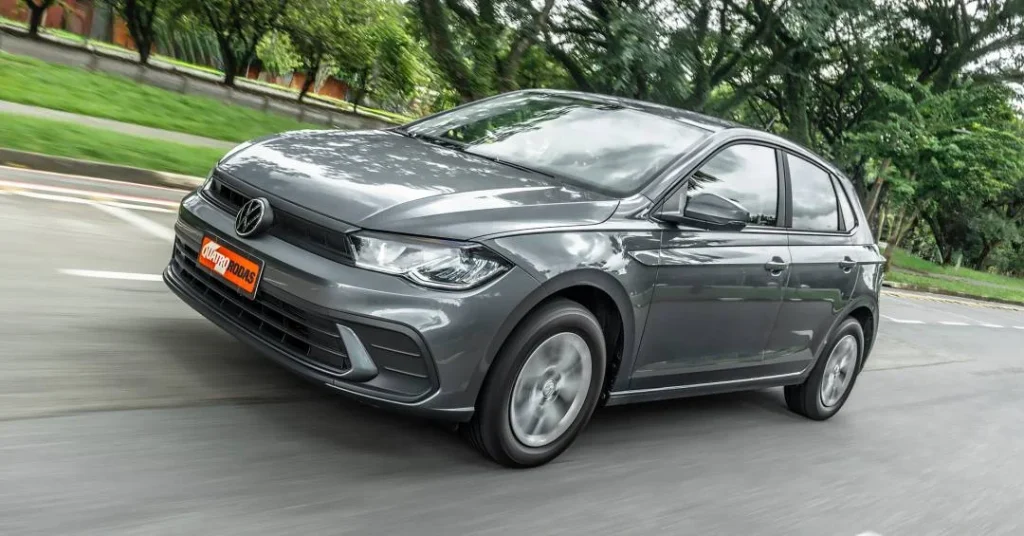
Volkswagen is closing the gap on long-time market leader Fiat as it aims to capture top spot across both cars and light commercial vehicles by 2025. The German automaker’s strong December sales figures, with over 9,000 units each for Polo, Tera, and T-Cross, have boosted its chances.
Key Takeaways
- Volkswagen narrows the gap on Fiat in overall market share as it aims to take top spot by 2025.
- The VW Polo leads sales with nearly 9,400 units followed closely by Tera and T-Cross.
- Fiat’s Strada pickup maintains its dominance over light commercial vehicles.
With a market share of 19.6% in passenger cars alone, Volkswagen is already leading the segment. The VW Polo, however, has overtaken Fiat’s long-reigning leader, the Strada, which still leads in pickup sales with more than 12,000 units sold.
Despite this success, Volkswagen’s challenge remains significant as it must compete against Fiat across both passenger vehicles and light commercial vehicles. The VW T-Cross, a relative newcomer to Brazil’s market, is proving its worth by securing third place in December sales figures with over 9,000 units sold.
While the VW Polo has been a consistent performer for years, the newer models like the Tera and T-Cross are gaining traction. Their combined success reflects Volkswagen’s strategy of offering diverse options to meet consumer demands. This approach contrasts with Fiat’s traditional dominance in pickup trucks.
Volkswagen’s aggressive push is evident not just through sales figures but also through product development, as seen recently with the unveiling of a hybrid Polo variant and plans for a new Udara model set to rival Fiat’s Toro.
Frequently Asked Questions
Does Volkswagen have any models competing directly against Fiat’s Strada?
The VW Saveiro is the closest competitor, with 6,500 units sold in December. However, it’s still some distance behind the market-leading Strada.
What are Volkswagen’s plans for future models to challenge Fiat further?
Volkswagen has announced a new Udara model and is developing hybrid versions of existing models like Polo. These moves indicate an intent to compete more strongly across both passenger cars and light commercial vehicles.
In the final stretch towards 2025, Volkswagen’s strategy seems well-calibrated with a blend of traditional favorites alongside newer offerings that are already making waves in Brazil’s competitive automotive market.
