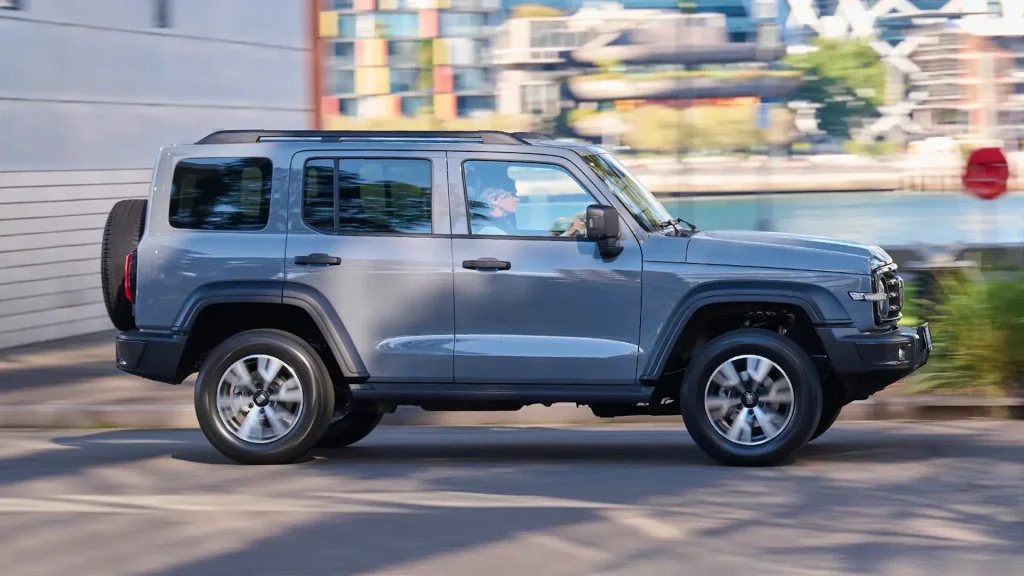
The addition of a turbocharged diesel engine to the GWM Tank 300 Ultra marks a significant step in this off-road wagon’s evolution, positioning it as a formidable competitor in its segment. Our review delves into how this new powertrain stacks up against its petrol sibling and rivals like the Ford Everest and Jeep Wrangler.
The diesel engine enhances torque and efficiency over the existing petrol model, offering improved performance for demanding terrain. Despite these benefits, there are some drawbacks: the ride quality isn’t as smooth as that of the petrol version, and interior space is somewhat limited compared to expectations. However, the Tank 300 Ultra Diesel’s towing capacity is a notable improvement.
As we reported in our previous analysis on MOT cost caps,this powertrain shift reflects broader trends in the automotive industry where diesel engines continue to play a crucial role, particularly in vehicles designed for tough conditions. The Tank 300 Ultra Diesel retains its off-road prowess while offering enhanced utility.
Evaluation of the vehicle’s overall performance reveals a balanced yet imperfect proposition. While it excels in towing and off-roading capabilities, improvements are needed in ride quality and throttle calibration to match the standards set by the petrol variant. The Tank 300 Ultra Diesel strikes a unique balance between traditional diesel virtues and modern SUV needs.
In summary, the GWM Tank 700 Ultra Diesel presents a compelling alternative for those seeking robust off-road capabilities with enhanced towing capacity. Its blend of powertrain efficiency and ruggedness makes it an interesting choice in a market where diesel engines remain relevant despite the growing presence of electric vehicles. As we reported earlier on Consumer Reports naming best large SUVs,the Tank 300 Ultra Diesel is poised to capture a niche audience seeking a reliable and powerful vehicle for challenging terrains.
