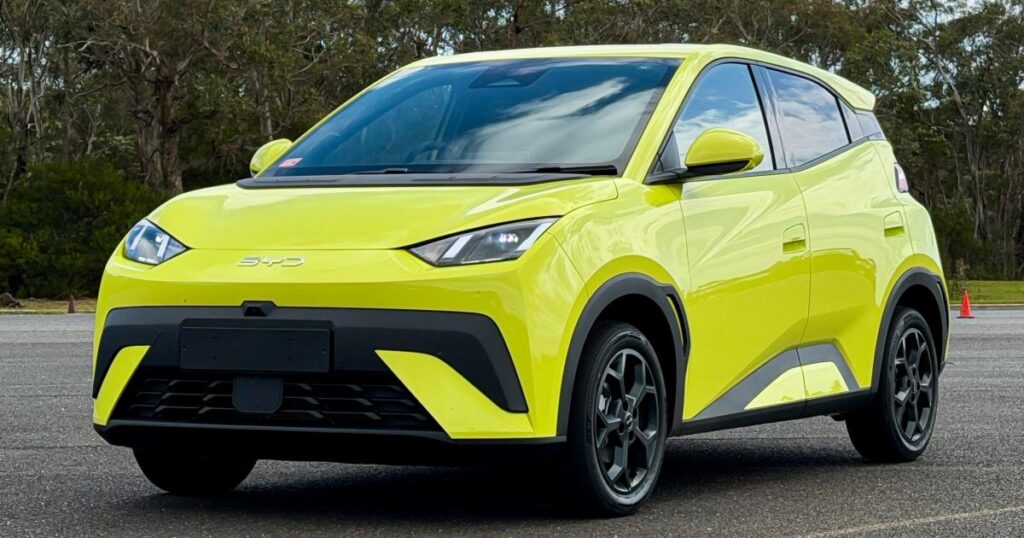
The <a href="https://autoglobalnews.com/jaecoo-j7-phev-undercuts-byd-sealion-targets-chery-and-geely-in-australia/” style=”color:#1a73e8;text-decoration:underline;” title=”Jaecoo J7 PHEV Undercuts BYD Sealion, Targets Chery and Geel”>BYD Atto 3, a compact electric SUV positioned as an affordable option in the Australian market, has recently been reviewed by Matt Campbell. The car is notable for its price point and features but notably lacks one of BYD’s standout attributes found in other models. This omission marks a critical moment in Australia’s evolving electric vehicle (EV) landscape.
Key Takeaways
- The Atto 3 is positioned as an affordable EV option for the Australian market, with a focus on practicality and efficiency.
- BYD’s signature fast-charging capability is notably absent in the Atto 3, setting it apart from other models in its lineup.
- This model represents a significant milestone for BYD’s expansion into Australia’s EV segment, highlighting strategic positioning within competitive pricing tiers.
The BYD Atto 3 offers an impressive range of up to 405 kilometers on a single charge, making it highly competitive in terms of battery efficiency. However, the absence of its brand’s hallmark fast-charging technology means that owners will need to rely on standard charging stations for recharging.
Competitively priced at approximately AUD $39,990 (excluding government incentives), the Atto 3 aims to attract budget-conscious consumers looking for a reliable EV option. This pricing strategy places it in direct competition with models like the Hyundai Kona Electric and MG ZS EV, both of which offer similar features but may vary in terms of battery range and charging capabilities.
Despite its lower price point, the Atto 3 maintains high standards in safety and comfort features, including advanced driver assistance systems (ADAS) and a spacious interior. The model’s inclusion of these elements underscores BYD’s commitment to offering comprehensive value propositions within more accessible price brackets.
The decision to exclude fast-charging technology could be seen as a strategic move by BYD to cater to specific market segments where standard charging infrastructure is sufficient, while also potentially reducing production costs and maintaining competitive pricing. This approach reflects the evolving dynamics of the Australian EV market, which continues to see increasing adoption rates despite ongoing challenges.
Frequently Asked Questions
Is fast-charging technology available as an optional upgrade for the BYD Atto 3?
No, the Atto 3 does not offer fast-charging capability either as standard or as an option. This feature is typically reserved for higher-tier models within BYD’s lineup.
How does the range of the BYD Atto 3 compare to its main competitors?
The Atto 3 offers a competitive range of up to 405 kilometers, which is comparable to or slightly better than models like the Hyundai Kona Electric and MG ZS EV. However, specific ranges can vary based on driving conditions and battery management systems.
In conclusion, the BYD Atto 3 presents a compelling option for those seeking an affordable yet efficient electric SUV in Australia’s growing EV market. Its strategic positioning addresses both cost concerns and practical needs, making it a noteworthy entry into this competitive segment.
