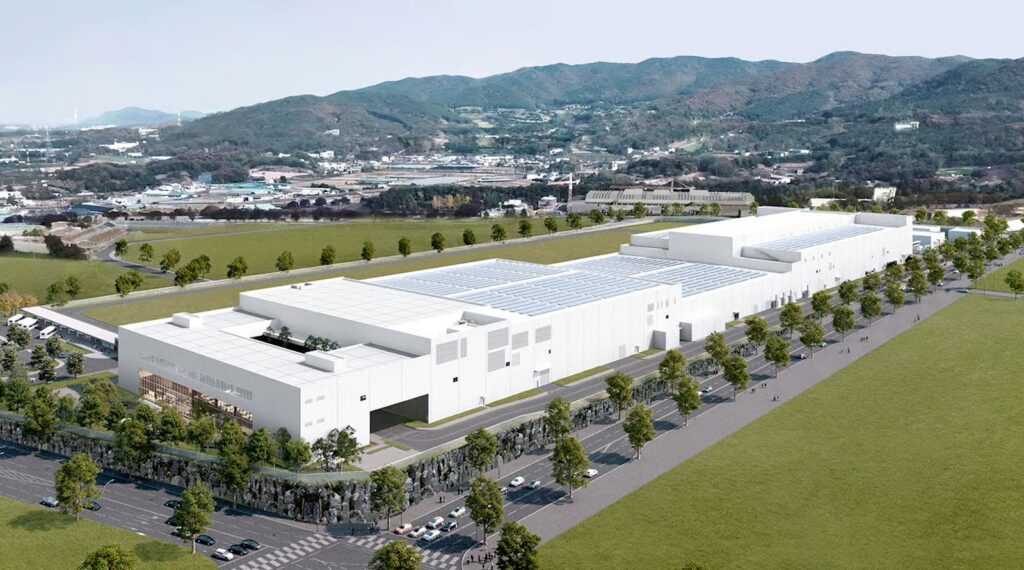
Hyundai Motor Group marked a significant milestone with the topping-out ceremony for its Future Mobility Battery Campus in Anseong, Korea, signaling a major investment in battery technology research and development. The facility aims to strengthen Hyundai’s position in global electric vehicle competitiveness by internalizing core battery capabilities.
Key Takeaways
- KRW 1.2 trillion investment for the Future Mobility Battery Campus, set to be completed by end of 2026.
- The campus will focus on internalizing core battery technologies including cell design and process engineering.
- Campus spans approximately 197,000 m² with a total floor area of 111,000 m² to foster cross-industry collaboration.
With the Future Mobility Battery Campus, Hyundai aims to solidify its leadership in electric vehicle technology by internalizing core battery capabilities such as cell design and process engineering. This move reflects a strategic shift from traditional automotive manufacturing towards advanced technological integration within the EV sector.
The 197,000 m² site area of the Future Mobility Battery Campus is designed to accommodate comprehensive research and development activities. It represents Hyundai’s commitment to enhancing battery technology for next-generation electric vehicles and extending its influence into robotics and Advanced Air Mobility (AAM).
Hyundai Motor Group’s investment in the Future Mobility Battery Campus underscores a broader industry trend towards vertical integration of critical components like batteries, which are pivotal for EV performance. This strategic move is reminiscent of how automakers once controlled engine production to gain competitive advantages.
The campus will serve as a hub for high-precision validation and development of advanced battery technologies, positioning Hyundai at the forefront of innovation in electric mobility. By fostering collaboration within the battery ecosystem, Hyundai aims to accelerate technological advancements that could redefine future mobility solutions.
Frequently Asked Questions
When is the Future Mobility Battery Campus scheduled for completion?
The campus is targeted for completion by the end of 2026, with construction progressing steadily since breaking ground in January 2025.
What are some key features of the Future Mobility Battery Campus?
The campus will focus on internalizing core battery technologies such as cell design and process engineering. It aims to foster collaboration within the battery ecosystem, enhance EV performance through optimized battery integration, and develop high-performance batteries for next-generation vehicles.
As Hyundai Motor Group continues its push towards electric mobility leadership, the Future Mobility Battery Campus stands out as a critical investment in technological infrastructure. This project represents not just an evolution but also a strategic pivot towards mastering core EV technologies, much like how automakers once mastered engine production to dominate automotive markets.
