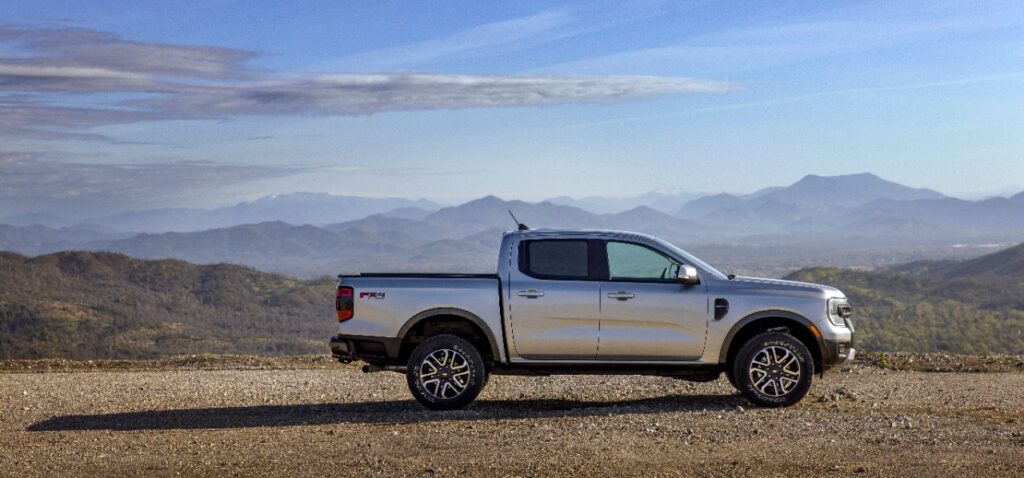
Ford Pro has once again made waves in the automotive industry by claiming its fourth victory at the International Pick-up of the Year awards. The new Ford Ranger PHEV, a trailblazer among hybrid trucks, was crowned champion earlier this year following rigorous testing and evaluation across Bulgaria.
What sets this award apart is that it’s the first time an electrically powered vehicle has taken home top honors in this prestigious competition. The jury commended the new Ranger PHEV for its exceptional performance, efficiency, and cost-effectiveness during daily operations. In a segment where fuel economy and robustness are paramount, the Ford Ranger excelled by offering unmatched power—281 horsepower and 697 Nm of torque—as well as a towing capacity up to 3500 kg.
During the testing phase, other notable contenders like INEOS, Foton, and Maxus put up a strong fight. Nevertheless, Ford’s PHEV model emerged victorious after demonstrating superior performance in both on-road and off-road conditions. The INEOS Grenadier Quartermaster came in second place, followed by the Foton V9.
At the Solutrans 2025 Gala Dinner in Lyon, France, Jarlath Sweeney of the International Van of the Year (IVOTY) jury presented the award to Hans Schep, General Manager of Ford Pro Europe. “We’re incredibly proud and honored that our new Ranger PHEV has been chosen as the winner for 2026/27,” said Schep. “This recognition underscores the continuous excellence and innovative spirit that define the Ranger line.”
One judge commented, “The Ford Ranger PHEV sets a new standard in its class by offering both impressive efficiency and top-tier performance.” The hybrid truck’s ability to switch between gas, battery power, or a combination of both modes is particularly noteworthy. Additionally, it includes Pro Power Onboard, which turns the vehicle into a mobile power source, significantly boosting productivity for businesses across Europe.
With these accolades and its advanced features, the Ranger PHEV is proving to be more than just another contender in the increasingly competitive pick-up market. It’s showing that electric power can coexist with traditional strengths like towing capacity and durability without sacrificing functionality or performance.
