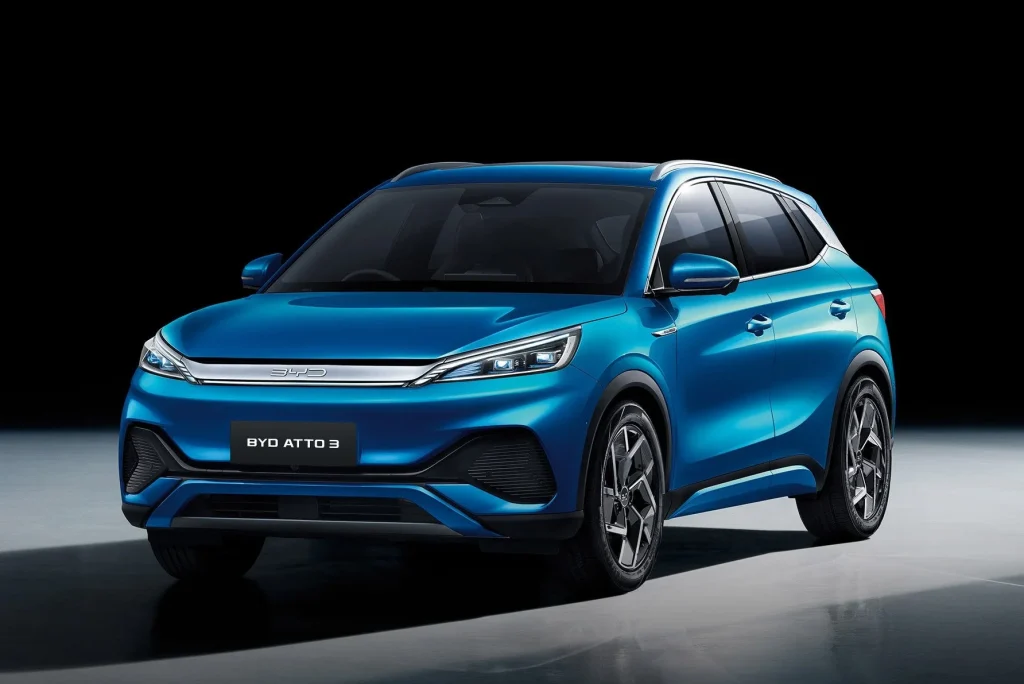
Chinese automaker BYD has overtaken American rival Tesla to become the world’s largest producer of battery electric vehicles (BEVs) with a record-breaking year. In 2025, BYD sold over four million new energy vehicles globally.
Key Takeaways
- BYD produced 4.6 million NEVs in 2025, including 2.26 million light BEVs
- Tesla’s production fell by nearly 9% to 1.64 million units last year
- BYD’s Atto 3 and Seagull models led the charge with strong sales growth worldwide
BYD reported a surge in light BEV sales, up 28 percent from the previous year to over two million units. The company’s best-selling model is the Atto 3, which has become an instant hit among families looking for reliable and efficient electric vehicles.
Meanwhile, Tesla saw its production drop by nearly nine percent in 2025 due partly to political controversies surrounding CEO Elon Musk’s support of former President Trump. The company also faced stiff competition from Chinese automakers like BYD across global markets.
The commercial vehicle segment at BYD showed the most significant growth, with a whopping 162% increase compared to last year’s figures. This success has helped BYD surpass state-owned SAIC Motor as China’s leading vehicle manufacturer overall.
BYD’s strategy of launching numerous new models and expanding its production capacity in recent years paid off handsomely. The company now offers a diverse range of vehicles, from compact cars to large SUVs, catering to various customer needs across different demographics.
Frequently Asked Questions
How did BYD overtake Tesla?
BYD produced 2.26 million light BEVs in 2025, compared to Tesla’s production of just under one and a half million units.
What are some reasons for the decline in Tesla’s sales last year?
Tesla faced political backlash due to CEO Elon Musk’s support of former President Trump. Additionally, growing competition from Chinese automakers like BYD affected its market share.
The shift at the top shows how rapidly the global automotive industry is evolving as more consumers embrace electric vehicles over traditional fuel-powered cars.
