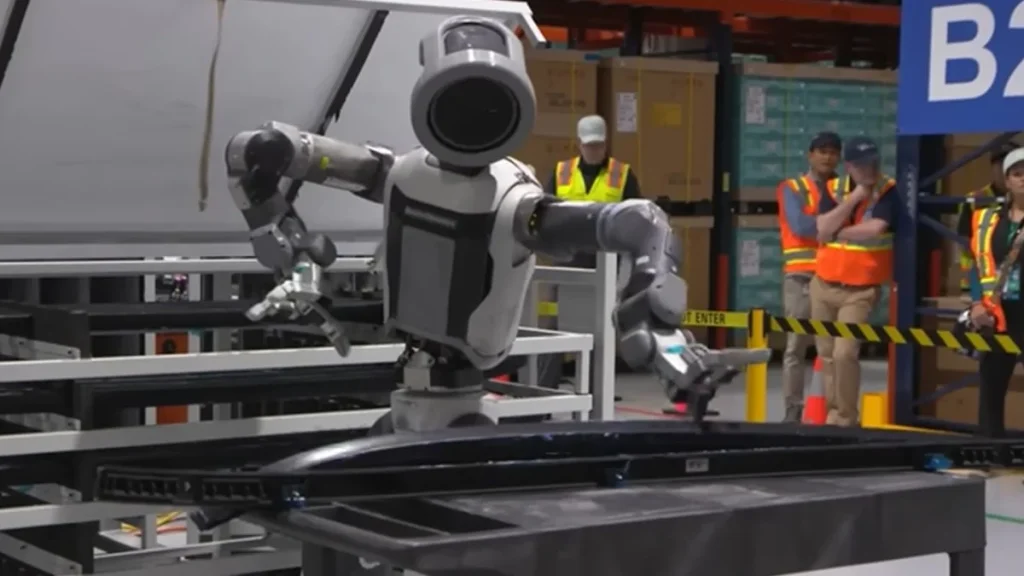
Back when the world was grappling with the early stages of the pandemic, Hyundai made a bold move by acquiring Boston Dynamics. Now, those once-distant dreams of walking robots are closer to reality as Hyundai prepares to use humanoid models like Atlas for manufacturing tasks at its Metaplant in Georgia.
Key Takeaways
- Hyundai is testing Boston Dynamics’ Atlas robot on assembly line duties, marking a shift towards more flexible automation.
- The robots are designed to be adaptable and can handle tasks from sorting parts to quality inspection.
- This move isn’t about replacing human workers but augmenting them by taking over strenuous or dangerous jobs.
Automated manufacturing has been around for decades, with each new wave of technology promising greater efficiency. But these latest humanoid robots are a step up from the specialized machines we’ve seen before. They’re designed to perform tasks that require dexterity and adaptability—something traditional bots often lack.
The idea isn’t entirely novel; early assembly lines had their share of mechanical arms performing repetitive tasks, but now those same principles are being applied with AI-driven flexibility in mind. Atlas is one such model, capable not just of basic movements like welding or painting, but also more nuanced actions that mimic human workers.
But what sets these robots apart isn’t just the technology—it’s how they’re integrated into existing workflows. While traditional bots needed extensive reprogramming for each new task, the Atlas can learn and adjust on its own thanks to advancements in AI. This means fewer downtime periods when switching between production runs or introducing a new model.
While all this sounds like sci-fi come true, don’t expect your local factory floor to be manned by robots anytime soon. Hyundai isn’t looking to eliminate human workers but rather to enhance their capabilities and safety on the job site. The company sees these bots as tools for handling tasks that are too dangerous or physically demanding for people.
Frequently Asked Questions
How will Atlas robots change manufacturing?
The introduction of humanoid robots like Atlas is expected to make assembly lines more flexible and efficient. They can handle a wider range of tasks with less need for reprogramming compared to traditional industrial bots.
Aren’t these robots going to take jobs from humans?
No, Hyundai sees the use of Atlas as augmenting human labor rather than replacing it. The goal is to free up people from dangerous or strenuous tasks and allow them to focus on more complex responsibilities.
As we look back at how far automotive manufacturing has come since those early days with mechanical arms, it’s clear that Hyundai isn’t just playing catch-up but leading the charge into a new era of robotic assistance. The future looks bright for both robots and human workers alike in this industry.
