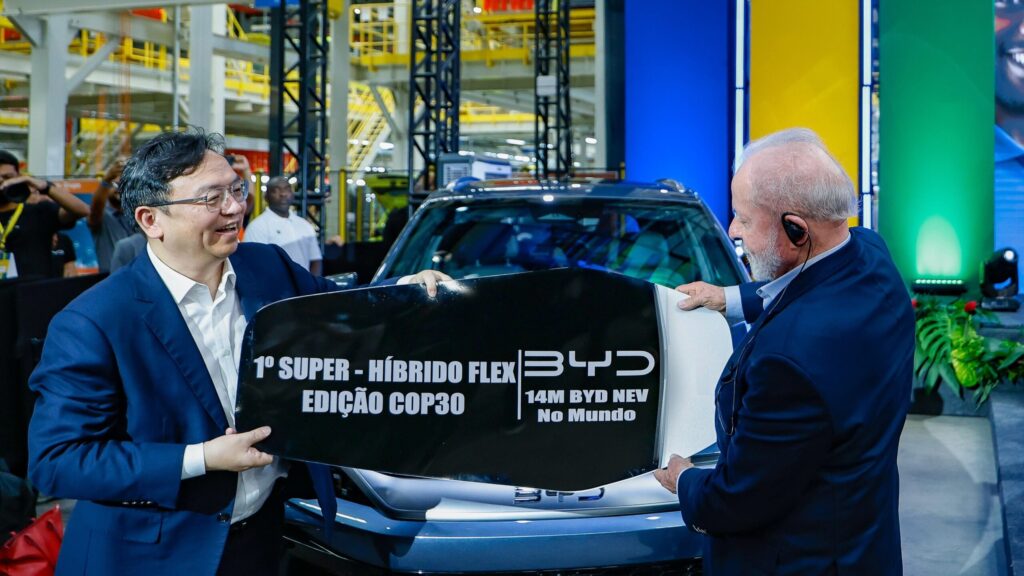
Chinese automaker BYD is leading an unprecedented surge in electric vehicle adoption across Central and South America, according to recent reports from JATO Dynamics. With the Chinese automotive industry facing intense price competition at home, many manufacturers are exporting their vehicles to international markets, particularly targeting regions like Latin America where demand for affordable EVs is on the rise.
“The Chinese have carved out a significant presence in both electric and conventional car segments,” stated Martin Bresciani, president of Chile’s automotive business chamber CAVEM. In the first quarter of 2025, Chinese brands accounted for an impressive 29.6% of new passenger vehicle sales in Chile alone. While the overall penetration of EVs remains modest at just 4% across the entire region, specific markets like Chile and Uruguay have seen remarkable growth with September figures showing a 10.6% share for electric vehicles in Chile and a staggering 28% in Uruguay.
BYD’s success can be attributed to strategic partnerships with local importers who offer affordable models tailored to regional preferences, making their vehicles highly competitive both on price and accessibility fronts. In Uruguay, where BYD holds the third-largest market share behind Chevrolet and Hyundai, the brand has managed a 22% penetration rate through aggressive pricing strategies and innovative financing options.
Challenges persist for established automakers due to Chinese brands’ ability to offer vehicles at significantly lower prices. Gonzalo Elgorriaga, owner of a luxury car dealership in Uruguay, remarked, “The Chinese struck first and hard with their offerings.” By collaborating with local banks to provide favorable financing terms, BYD is able to undercut competitors by offering three pick-up trucks for the price typically spent on two traditional brand vehicles.
Furthermore, China’s Belt and Road initiative has facilitated this expansion through infrastructure development. The construction of a new port facility in Chancay, Peru, serves as a strategic gateway for Chinese-made cars destined for South and Central American markets. Each ship docking at the port brings between 800 to 1,200 vehicles, with Cosco Shipping expecting annual arrivals from China to reach 19,000 units by year-end. This logistical advantage not only benefits BYD but also other Chinese brands like Chery that are leveraging this infrastructure.
The market dynamics in countries such as Peru underscore the growing importance of this new trade route. Local customs data reveals a significant increase in car arrivals from China, rising to 3,057 units in July compared to just 839 in January, reflecting the rapid growth of Chinese automakers in these markets.
While Brazil presents unique challenges due to its established automotive industry and regulatory landscape, Chinese brands are still managing substantial market shares through similar tactics. As the EV segment continues to expand globally, BYD’s leadership in Latin America signals a broader shift towards greater acceptance and adoption of electric vehicles throughout emerging markets.
In conclusion, the rise of Chinese automakers like BYD in Central and South American markets marks an important milestone in the global expansion of electric mobility. By combining affordability with strategic partnerships and infrastructure investments, these brands are poised to shape future trends in automotive technology and distribution worldwide.
