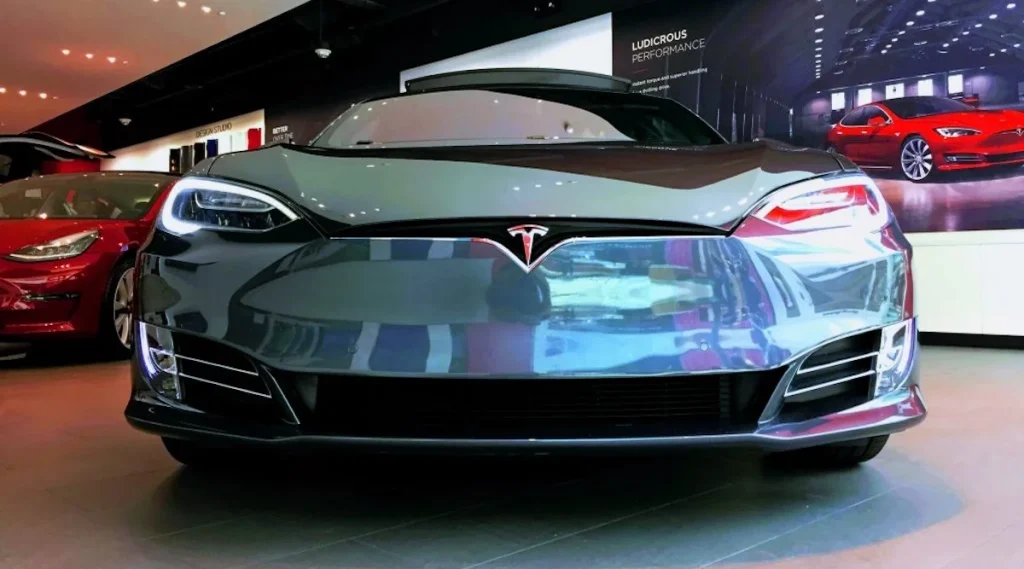
Cox Automotive has forecasted a significant drop of nearly nine percent in Tesla’s sales in the United States by 2025, despite an overall growth projection for auto sales.
Key Takeaways
- Tesla’s US sales are projected to decline from 634K units in 2024 to 577K by the end of next year, marking an 8.9% decrease.
- The company expects Toyota and GM to see substantial growth with 8.4% and 5.1%, respectively, while Tesla’s market share drops from 4.0% to 3.5%
- Tesla’s US sales have already declined by three percent between 2023 and 2024
According to Cox Automotive’s latest forecast, the electric vehicle (EV) market leader will face a significant challenge in maintaining its current pace. The firm projects that Tesla’s U.S. sales volume for next year will drop from an estimated 633,762 units this year to around 577,097 vehicles.
While the overall auto industry is expected to grow by 1.8% in 2025, Toyota and General Motors are anticipated to lead with growth rates of 8.4% and 5.1%, respectively. This contrasts sharply with Tesla’s projected decline amidst a backdrop where it saw record sales during its third quarter last year.
Tesla’s performance has been mixed over the past few years, experiencing both highs and lows. The company reported an uptick in sales following the end of federal tax incentives for EVs but struggled earlier this year before achieving record figures again towards the latter half. Despite these fluctuations, Tesla’s U.S. market share is set to drop from 4% last year to around 3.5%.
Analysts suggest that while the third quarter saw a spike due to tax credit expiration timing, subsequent quarters have seen more challenges for Tesla, leading to this forecasted decline in sales and market share.
Frequently Asked Questions
How much are Tesla’s U.S. sales expected to drop?
Cox Automotive predicts a 9% decrease, from approximately 633K units in 2024 down to around 577K by the end of next year.
Which automakers are forecasted to grow?
The report projects significant growth for Toyota with an increase of about 8.4%, and General Motors at roughly 5.1% in U.S. sales during the same period.
While this projection paints a challenging picture for Tesla, it’s important to note that market dynamics can change rapidly due to various factors such as technological advancements or policy shifts affecting EV adoption rates.
