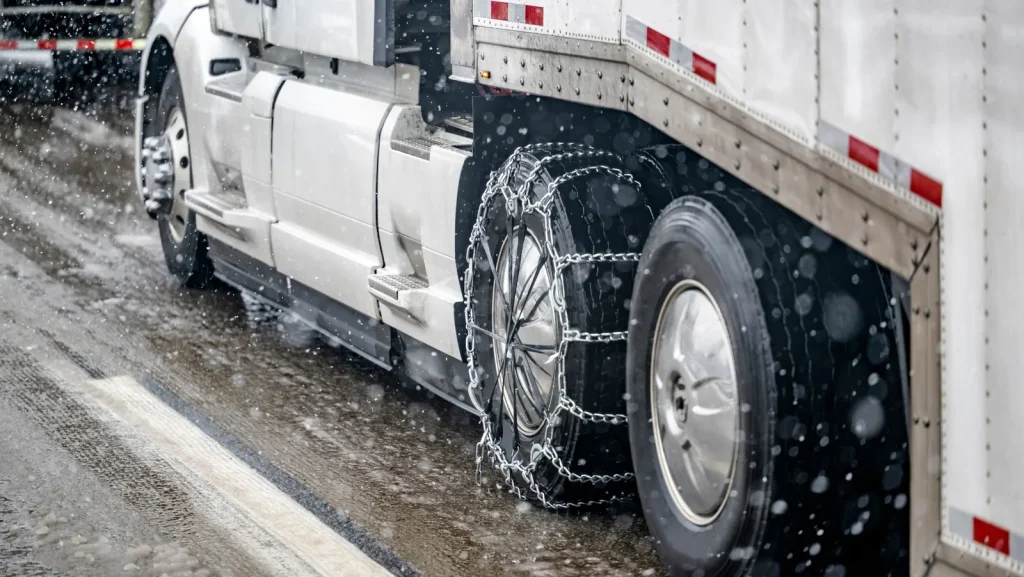
Truckers face unique challenges when driving in winter conditions, especially with the heavy loads they carry. While passenger vehicles can often avoid harsh weather or opt for better-equipped tires, commercial drivers don’t have that luxury.
Key Takeaways
- Semi trucks are required to use snow chains in many areas despite the availability of winter tires.
- The cost of switching to winter tires for large fleets can be prohibitive, with some commercial vehicles opting out due to budget constraints.
- In icy conditions, tire chains provide better traction and stability compared to standard or even winter tires.
Winter tires offer improved performance on snow but fall short in extreme ice conditions. Semi trucks weigh up to 80,000 pounds when fully loaded, making them more prone to sliding out of control during bad weather.
Tire chains are a mandatory requirement for commercial vehicles like semis in certain regions and times due to their superior grip on icy roads. In Oregon, drivers face fines as high as $880 if they don’t comply with chain laws.
Switching out tires regularly is expensive; a single truck tire can cost up to $600, which multiplies quickly for vehicles equipped with 10 or more wheels. The frequent replacement needs of long-distance trucks also factor into the high costs.
Buses and other large commercial vehicles often skip winter tires due to similar financial reasons. Operators must balance safety requirements against operational expenses when deciding on tire types.
Frequently Asked Questions
Why don’t semi trucks use winter tires?
Semi truck operators often avoid using winter tires due to high costs. A single premium winter tire can cost up to $1,200.
What happens if a commercial vehicle doesn’t follow chain laws during winter storms?
Failing to use snow chains when required by law results in hefty fines and potential safety hazards. In Oregon, the minimum fine is $880 for non-compliance.
Tire chains offer better traction on ice but come with their own set of challenges like increased fuel consumption and wear. However, given the risks involved with winter driving conditions, many truckers find them a necessary evil to ensure road safety.
