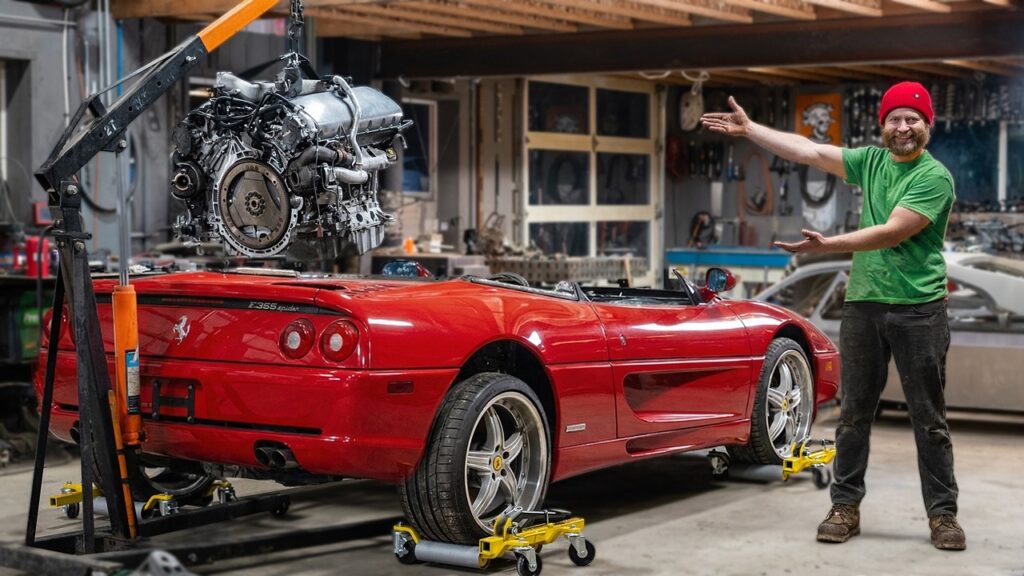
The automotive world is abuzz with the news of a radical engine swap in one of Italy’s most revered sports cars, the Ferrari F355. The Grind Hard crew has taken on an ambitious project by mounting a Cummins V10 twin-turbo diesel into this iconic Italian thoroughbred. This unconventional move raises eyebrows and questions about performance, reliability, and the integrity of the classic design.
Key Takeaways
- The project aims to provide a significant power upgrade over the F355’s original 3.5-liter V8 engine.
- Despite skepticism, there is potential for this diesel swap to offer reliable and consistent performance in drag racing events.
- The Grind Hard crew faces technical challenges in integrating the massive Cummins engine into the compact Ferrari chassis.
For enthusiasts familiar with automotive history, the idea of a diesel-powered sports car might seem sacrilegious. However, this project draws parallels to earlier attempts at unconventional powerplants in racing and street cars, such as the early turbocharged engines that revolutionized Formula One and later trickled down into road-going vehicles.
The F355’s original 348-horsepower V8 engine was renowned for its high-revving nature and smooth power delivery. The Cummins diesel swap aims to replace this with a torque monster capable of producing upwards of 1,000 horsepower and over 1,600 lb-ft of torque. This transformation is not just about raw numbers; it’s also about the unique character that diesel engines bring to performance driving.
One of the key challenges in this project lies in the structural integrity of the F355 chassis when accommodating such a heavy and powerful engine. The Cummins V10, with its robust build quality and advanced turbocharging technology, presents significant weight and mounting issues compared to the lightweight aluminum block of the Ferrari’s original engine. Additionally, integrating the diesel fuel system and exhaust components into the sleek design of the F355 requires innovative engineering solutions.
While the idea of a diesel-powered Ferrari might seem like a sacrilege to purists, it also opens up new possibilities for enthusiasts who enjoy pushing boundaries in automotive performance. The Grind Hard crew’s project not only tests the limits of what is possible with modern engine technology but also challenges preconceived notions about the role of diesels in high-performance applications.
Frequently Asked Questions
Will this diesel swap actually improve performance?
The potential for improved performance is significant, given the torque output and reliability benefits of modern diesel engines. However, it remains to be seen how well the Cummins V10 will integrate with the F355’s chassis and drivetrain.
What are some technical challenges involved?
The primary challenge is accommodating the heavy weight of the diesel engine within the compact Ferrari frame. Additionally, integrating the fuel system and exhaust components without compromising the car’s aesthetics or performance requires advanced engineering skills.
In conclusion, while mounting a V10 twin-turbo diesel into an F355 Ferrari is a bold and unconventional move, it has the potential to be both fascinating and educational. The project serves as a testament to automotive ingenuity and the enduring spirit of pushing boundaries in performance engineering.
