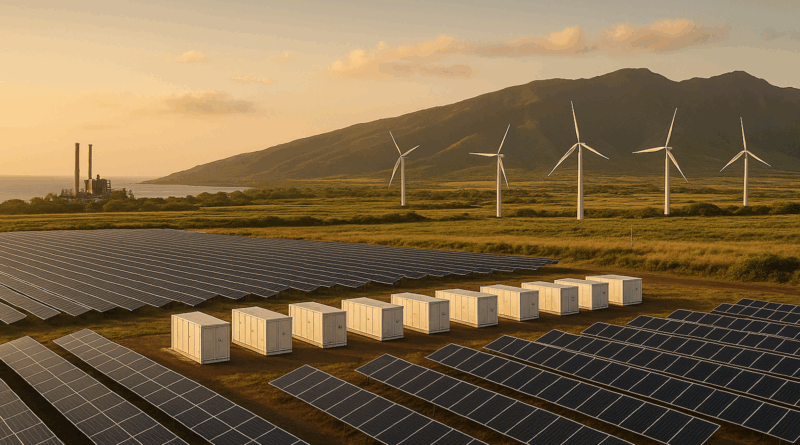
Hawaii is reconsidering its energy strategy with liquefied natural gas (LNG) as a potential bridge fuel to transition from oil dependency towards renewable sources by 2045. The state currently relies heavily on oil, particularly in Oahu where it supplies over 10 TWh annually of the total statewide consumption.
Proponents argue that LNG offers cleaner emissions and lower costs compared to residual fuel oil, which is currently used extensively for electricity generation. However, critics highlight that this solution might be a detour from achieving long-term renewable goals due to lifecycle emissions associated with LNG supply chains.
The current energy mix in Hawaii includes significant thermal power generation, with solar photovoltaic (PV) systems playing an increasingly important role but still insufficient to meet peak demand. The closure of the last coal plant was filled entirely by oil-fired plants, illustrating the challenge of transitioning away from fossil fuels quickly and efficiently.
Despite the high cost of electricity in Hawaii—among the highest in the United States—the push for renewables is driven not only by environmental concerns but also by economic factors. Solar energy on rooftops has grown significantly, contributing to daytime demand reduction, yet thermal power remains indispensable during off-peak hours and cloudy days.
One key issue with adopting LNG as a bridge fuel is its potential impact on the state’s ambitious renewable goals. The legal requirement for 100% renewable electricity by 2045 means any new fossil asset would need to be retired early or converted, limiting the economic lifespan of such investments.
Moreover, while proponents argue that LNG reduces local air pollution and provides reliability during the transition period, critics point out that oil-fired generation is inflexible and poses health risks due to sulfur dioxide, particulates, and heavy metals. The debate underscores the need for a balanced approach between immediate energy security and long-term sustainability.
