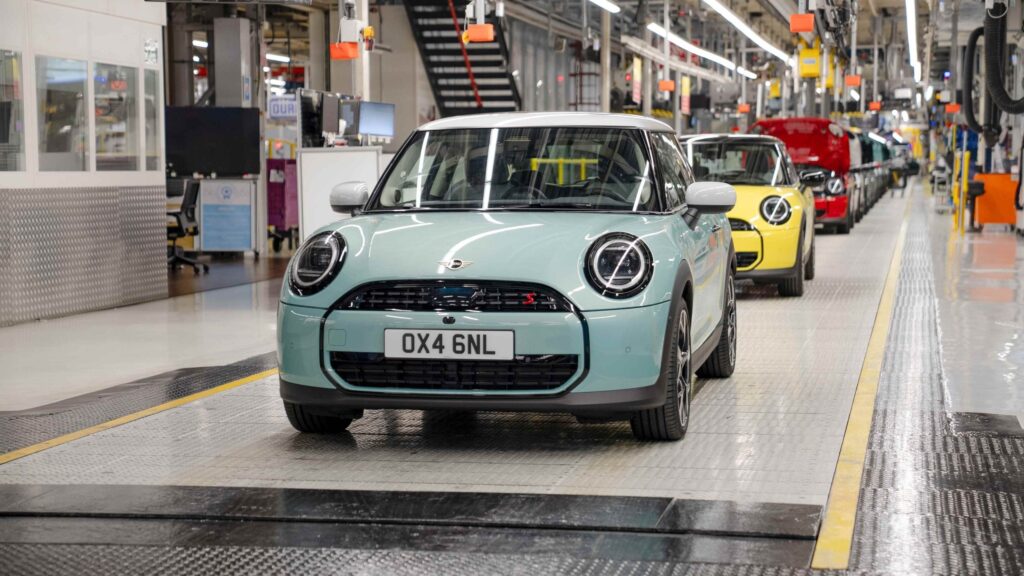
The UK automotive industry is urging Chancellor Rachel Reeves to bolster the government’s Modern Industrial Strategy, aiming to restore vehicle manufacturing capacity to 1.3 million units by 2035 from a forecasted output of around 700,000 passenger cars this year.
According to GlobalData, UK car production has dropped significantly since its peak in 2018 when it reached an annual total of 1.5 million vehicles. The Society of Motor Manufacturers and Traders (SMMT) is calling for an annual Autumn Budget statement that would support the sector as a hub for advanced manufacturing investment.
The SMMT highlights recent government commitments, including the £2.5 billion fund to boost innovation, productivity, and inward investment in the automotive industry. Additionally, landmark trade deals with the US and India offer preferential treatment for automotive products, while regulatory frameworks are enabling automated ride-hailing services from next year.
However, the SMMT warns that certain fiscal policies proposed ahead of the Autumn Budget could undermine these efforts. One such proposal involves singling out electric vehicles (EVs) for a new pay-per-mile tax to address declining fuel duty revenues due to rising electrification rates. This measure is seen as potentially damaging to EV adoption.
The automotive sector’s contribution to economic prosperity and decarbonization cannot be overstated, with the UK market being crucial for attracting investment in the industry. The SMMT emphasizes that any policies threatening this market could severely harm the sector’s growth prospects.
Despite these challenges, the SMMT remains optimistic about the potential of the automotive sector to recover and thrive under supportive government initiatives. Continued collaboration between industry leaders and policymakers will be essential for overcoming current obstacles and achieving long-term goals.
