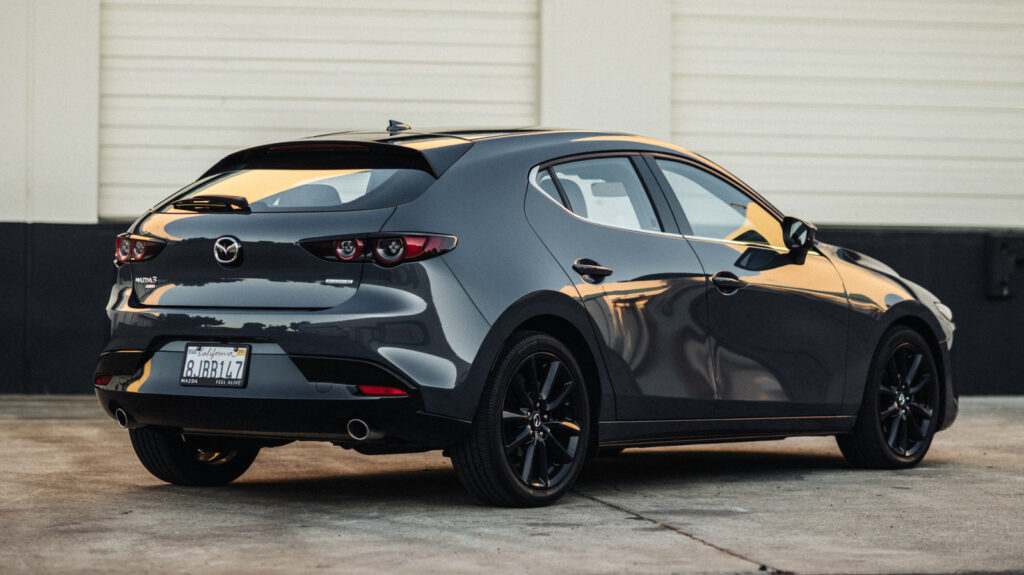
The fourth-generation Mazda 3, introduced in 2019, marked a significant departure from its predecessor by adopting a torsion beam rear suspension. This change has sparked debate among automotive enthusiasts and critics alike, questioning the rationale behind switching from an independent multi-link setup to one that is traditionally associated with economy cars.
Key Takeaways
- The Mazda 3’s fourth-generation model uses a torsion beam rear suspension instead of the previous multi-link design.
- This change aims to balance cost efficiency, weight reduction, and overall vehicle dynamics while maintaining safety standards.
- Mazda engineers claim that despite the simpler setup, the new configuration offers adequate handling and comfort for its target market.
Since 2019, automotive enthusiasts have debated Mazda’s decision to switch from a multi-link rear suspension in the third-generation model to a torsion beam design. The shift is particularly intriguing given Mazda’s reputation for prioritizing driving dynamics and the Jinba Ittai philosophy, which emphasizes the seamless connection between driver and vehicle.
The adoption of a torsion beam suspension in the fourth-gen Mazda 3 reflects a strategic move towards cost reduction and weight savings without compromising on safety or basic handling characteristics. This decision is part of Mazda’s broader strategy to offer competitive pricing while maintaining high standards for ride quality and crash performance.
Engineers at Mazda argue that modern torsion beam designs can provide sufficient ride comfort and handling stability, especially in urban environments where the primary focus is on daily commuting rather than track driving. The torsion beam suspension’s simplicity also enables more straightforward manufacturing processes, potentially leading to lower production costs without sacrificing crucial vehicle attributes.
Despite these advantages, critics argue that a multi-link rear suspension offers superior performance and flexibility for fine-tuning ride characteristics. Multi-link systems allow each wheel to move independently in multiple directions, providing enhanced grip during cornering and better overall handling dynamics compared to the more rigid torsion beam setup.
Frequently Asked Questions
Does the Mazda 3’s new rear suspension affect its safety ratings?
No, the fourth-gen Mazda 3 still received a Top Safety Pick award from IIHS, indicating that the torsion beam design does not compromise on crashworthiness or occupant protection.
How does the new rear suspension impact fuel efficiency?
The lighter weight and simpler construction of the torsion beam suspension contribute to improved fuel economy by reducing overall vehicle mass, although specific figures vary based on driving conditions and other factors.
In conclusion, while Mazda’s decision to use a torsion beam rear suspension in the fourth-gen Mazda 3 may seem counterintuitive at first glance, it aligns with broader industry trends towards more cost-effective yet efficient engineering solutions. This approach allows Mazda to maintain its commitment to safety and affordability without entirely sacrificing driving dynamics.
