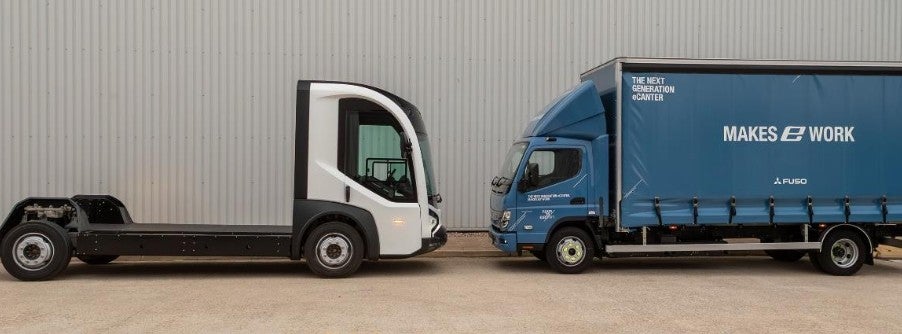
Mitsubishi Fuso Truck and Bus Corporation (MFTBC) has entered into a memorandum of understanding with Israeli automotive technology company, REE Automotive Ltd., to develop next-generation commercial vehicles. The collaboration aims to integrate Software Defined Vehicle (SDV) and X-By-Wire (XBW) technologies, which promise enhanced flexibility and scalability in vehicle architectures.
SDVs represent the future direction for Mitsubishi Fuso as they offer greater design freedom through software control, extending vehicle lifespans and reducing total cost of ownership. XBW technology replaces traditional mechanical linkages with electronic controls, improving safety, operability, and fuel efficiency while facilitating advanced driver assistance systems (ADAS) and autonomous driving features.
The partnership will see the creation of a Proof of Concept (PoC) vehicle within one year, integrating REE’s P7-C electric chassis with MFTBC’s eCanter model. This initiative is part of an ongoing evaluation process by Mitsubishi Fuso to assess potential partnerships that align with their vision for next-generation commercial vehicles.
Historically, the automotive industry has seen significant shifts from mechanical systems to more sophisticated electronic controls. The introduction of SDVs and XBW technologies marks a new chapter in this evolution, building on the advancements made since the advent of electric trucks like the eCanter. These new technologies are set to redefine how commercial vehicles operate and evolve over time.
For Mitsubishi Fuso, the partnership with REE Automotive represents a strategic move towards leveraging cutting-edge technology to enhance their product offerings. The integration of SDV and XBW features is expected to provide customers with more flexible and cost-effective solutions compared to traditional vehicle architectures.
The PoC vehicle will serve as a critical milestone in this collaboration, showcasing the potential benefits of combining MFTBC’s eCanter chassis technology with REE’s innovative P7-C platform. This joint initiative underscores the industry trend towards modular architecture designs that offer greater design flexibility and advanced safety features for commercial vehicles.
