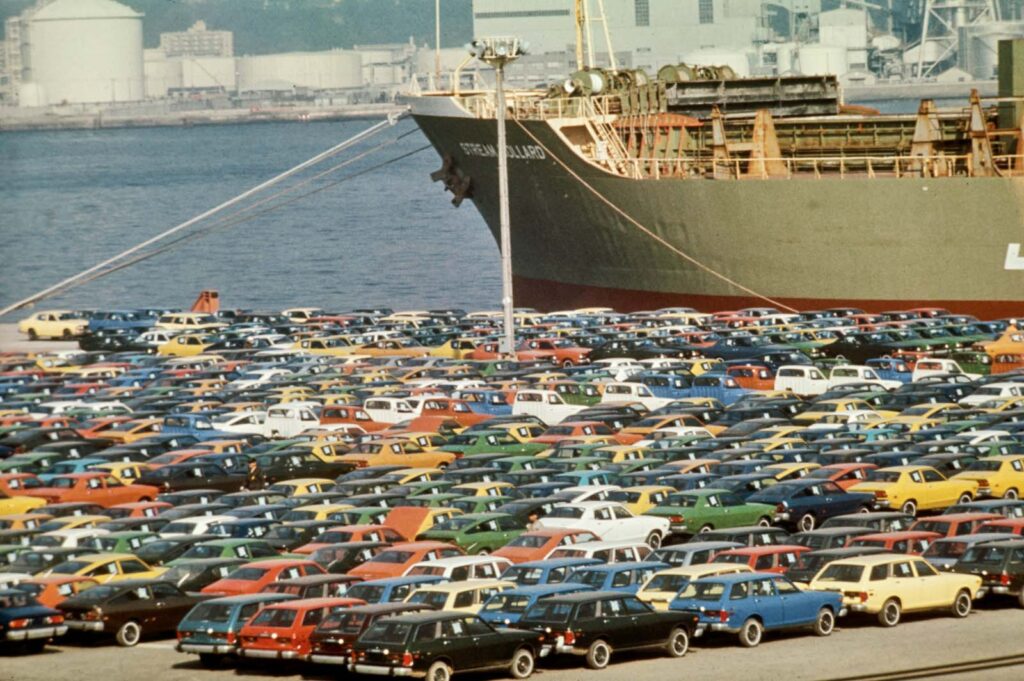
Today’s headlines echo the past as Chinese car brands take a bigger bite out of the UK market, reminiscent of Japan’s rise in the mid-1970s. Just like then, concerns and calls for protectionism are swirling.
In August 1973, British Leyland’s Lord Donald Stokes made waves by suggesting bans on foreign cars to help Britain’s struggling auto industry. His plea came as imported vehicles hit a record high of 32% market share in the UK that month.
Japanese automakers like Datsun (now Nissan) were quick to push back, arguing that such measures would hurt rather than heal. They pointed out that restricting Japanese imports wouldn’t stop foreign brands from taking over; it might even harm British carmakers by stifling competition.
The SMMT president Gilbert Hunt sided with Stokes, citing a serious trade imbalance. Yet Datsun UK’s response was blunt: “We are at a loss to understand your agitation.” They argued that suppressing high-quality competition wouldn’t inspire staff or improve the industry’s performance.
Fast forward to today, and Chinese brands like Geely, BYD, and Great Wall have already captured 8% of the UK market in just one year. This surge has sparked anxiety among Britons who fear losing their jobs as smaller domestic carmakers struggle against these new giants.
The parallels between then and now are striking. Just as Britain faced an influx of Japanese cars decades ago, it’s now grappling with a flood of Chinese vehicles. The debate over protectionism remains contentious, with some arguing that history shows such measures can backfire, hurting both consumers and domestic manufacturers in the long run.
