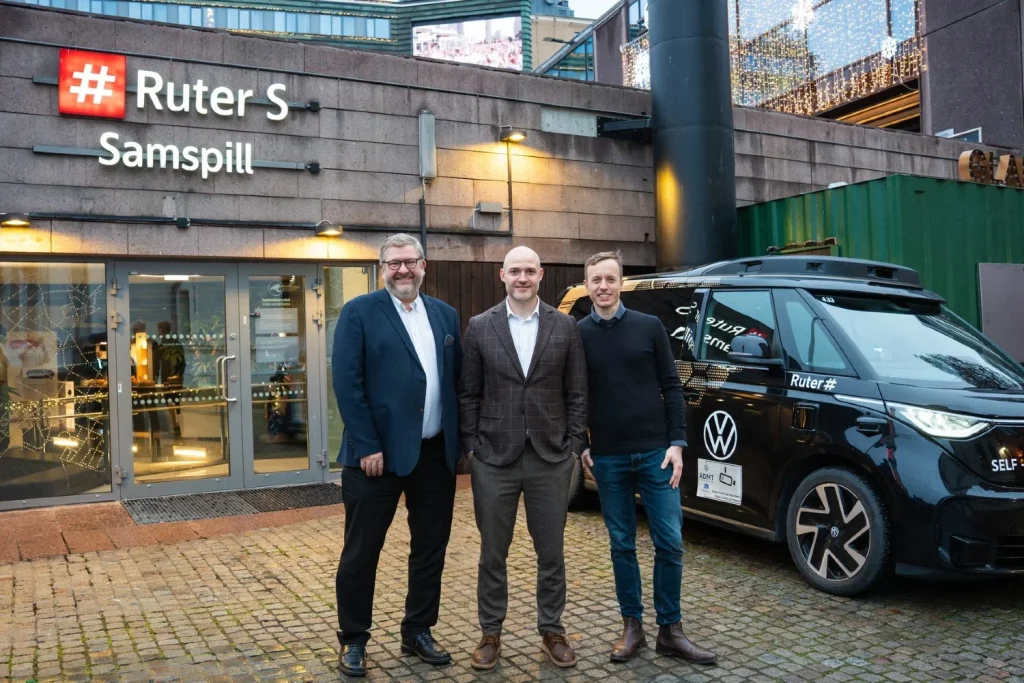
Oslo’s transport authority Ruter and operator Holo are partnering with Volkswagen’s mobility service provider Moia to introduce autonomous electric shuttles of the ID. Buzz AD type, set for deployment from spring 2026.
Key Takeaways
- Ruter and Holo will use self-driving ID. Buzz AD vehicles developed by Moia to offer on-demand transport services in Oslo starting next year.
- The project marks a strategic shift for Moia, moving from operating pooled taxis itself towards becoming a technology provider for autonomous mobility solutions.
- Since 2023, Ruter and Holo have been testing self-driving public transport vehicles in Groruddalen district as part of the EU-funded ULTIMO consortium project.
Ruter aims to embed this new service within its sustainable mobility strategy by integrating it with existing public transportation options. The ID. Buzz AD features advanced sensor technology including cameras, lidar, and radar systems for safe autonomous operation.
Moia’s move towards a licensing model reflects the growing trend in automotive tech companies shifting from direct vehicle operations to software and system provision. This strategy allows Moia to scale its reach without expanding fleet sizes or operational infrastructure directly.
The collaboration with Ruter represents one of several recent initiatives by Moia to expand internationally, following similar partnerships in Germany where it has tested autonomous ridepooling services since 2018.
And while the initial focus is on Oslo’s Groruddalen district, plans are underway for broader city-wide implementation as the technology matures and regulatory approvals are secured.
Frequently Asked Questions
Will other cities be adopting this service?
Yes, Moia is exploring similar partnerships with public transport authorities in multiple European cities as part of its expansion strategy. However, each city’s regulatory environment and infrastructure requirements will dictate the pace at which these services are rolled out.
What technology does the ID. Buzz AD use?
The vehicle uses a sophisticated sensor suite including cameras for visual data collection, lidar to map its surroundings in 3D space, and radar systems that detect objects at longer ranges than lidar or camera sensors alone.
With Moia’s shift towards technology provision, the company is positioning itself as an enabler of autonomous mobility rather than a direct operator. This strategic pivot could set industry standards for future urban transport solutions.
