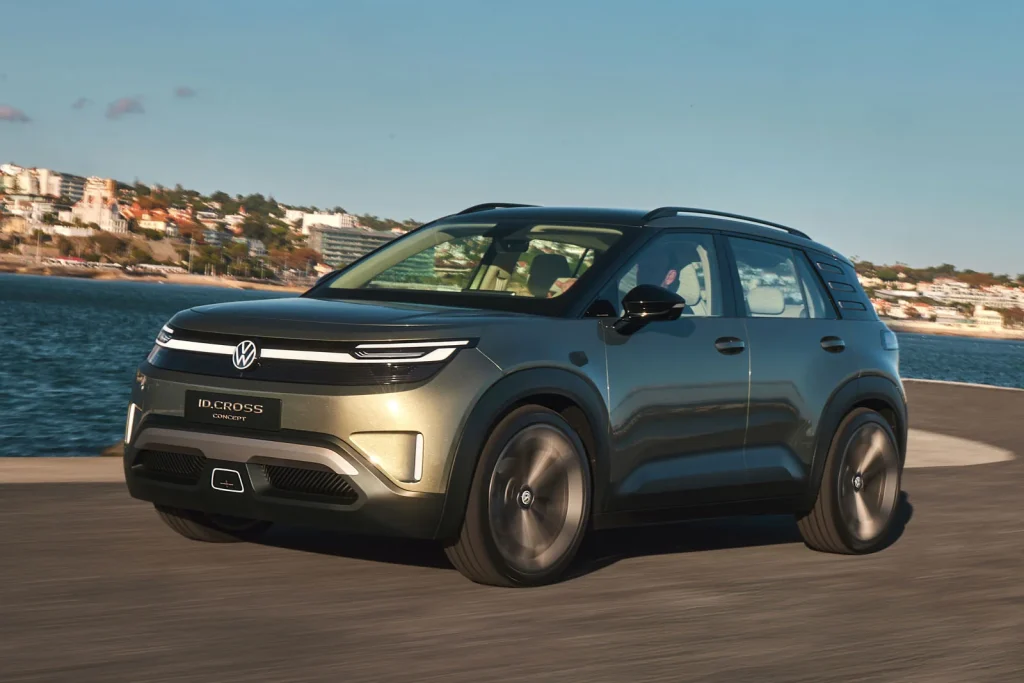
Volkswagen has unveiled the ID Cross concept, a compact electric vehicle aiming to compete with established models like the Tesla Model Y and Nissan Leaf. Designed for urban environments, it promises efficient performance and advanced tech features.
Key Takeaways
- The ID Cross has an estimated range of 400 kilometers on a single charge.
- Priced competitively at around £25,000 (before incentives).
- Includes advanced driver assistance systems and digital connectivity features.
With its sleek design and compact dimensions measuring 4.1 meters in length, the ID Cross aims to attract tech-savvy city dwellers looking for an eco-friendly ride. Its battery pack offers a capacity of approximately 57 kWh, providing ample range for daily commuting needs.
The concept car integrates Volkswagen’s MEB platform, known for its modular approach that allows for scalable electric vehicle production. This flexibility enables the manufacturer to adapt quickly to changing market demands and technological advancements in EVs.
Competitors like Tesla’s Model Y offer longer ranges but come at a higher price point of around £40,000. Meanwhile, Nissan’s Leaf is more affordable starting from £28,590 but falls short on range with just 367 kilometers compared to the ID Cross’s estimated 400 km.
However, some critics argue that while the concept looks promising, production delays and supply chain issues could hinder its timely market entry. Despite this, Volkswagen remains optimistic about meeting consumer expectations in a rapidly growing EV segment.
Frequently Asked Questions
What’s the range of the ID Cross?
The estimated driving range is 400 kilometers based on current testing data, making it suitable for daily urban use without frequent charging.
How much does the ID Cross cost?
Priced competitively at around £25,000 before any government incentives or subsidies are applied.
In conclusion, Volkswagen’s ID Cross concept represents a significant step towards electrifying urban transportation. With its blend of affordability and advanced features, it aims to capture market share from both traditional compact SUVs and established EV competitors.
