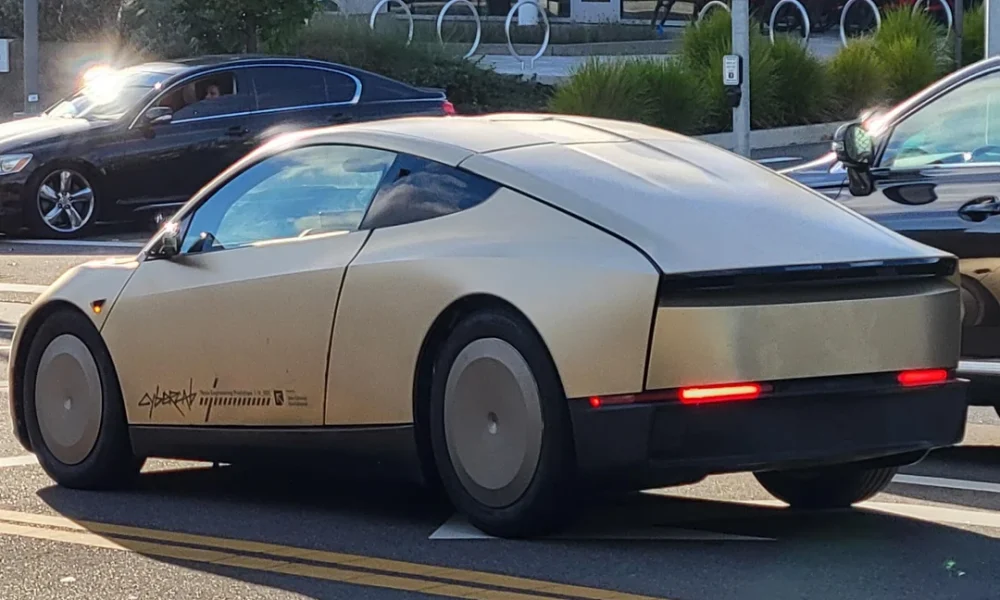
Imagine a world where the majority of your rides are in compact, efficient vehicles designed for solo or duo travel. That’s exactly what Toyota designer Karim Dia Toubajie’s analysis of Waymo’s <a href="https://autoglobalnews.com/nio-narrows-losses-with-record-vehicle-deliveries-in-q3-2025/” style=”color:#1a73e8;text-decoration:underline;” title=”Nio Narrows Losses with Record Vehicle Deliveries in Q3 2025″>Q3 2025 occupancy stats reveals, confirming Tesla’s controversial two-seat Cybercab strategy was actually ahead of its time.
Key Takeaways
- 90% of Waymo robotaxi trips carry two or fewer passengers.
- Tesla’s Cybercab, a two-seater with a 50kWh battery, aligns perfectly with the observed demand.
- The data highlights inefficiencies in using larger vehicles for most rideshare trips.
Waymo’s latest occupancy stats have sparked a fresh debate about vehicle size and efficiency. Karim Dia Toubajie, Toyota’s Lead Product Designer (Sustainable Mobility), dug into Waymo’s California Public Utilities Commission filings and found that 90% of their robotaxi trips carried two or fewer passengers. This revelation challenges the traditional notion of needing larger vehicles for ride-sharing services.
When we look at the numbers, it’s clear: 71% of these rides had just one passenger, while only 3% involved four people. The remaining percentages fall somewhere in between. It’s like having a big truck to carry just a few groceries – it works, but it’s not efficient.
Enter Tesla’s Cybercab, introduced last year as a two-seater robotaxi with a modest 50kWh battery. While some critics saw this as too small for practical use, the data now suggests that such a vehicle is perfectly sized for most ride-sharing needs. Toubajie even noted that while the Cybercab might be on the larger side of what’s required, it still aligns well with the demand.
So why not just stick to smaller vehicles? The answer lies in efficiency and cost savings. Smaller cars mean less material usage, lower energy consumption, and reduced maintenance costs. It’s like choosing a bicycle over a car for short trips – it’s better for you and the environment.
Frequently Asked Questions
Is Tesla’s Cybercab really as efficient as Waymo data suggests?
Absolutely! With 90% of trips carrying two or fewer passengers, the Cybercab’s design perfectly matches this demand. It’s like having a perfect tool for every job.
What about those rare times when more people need rides?
While larger vehicles are still needed occasionally, the data shows these instances are relatively rare. For most trips, smaller and more efficient vehicles like the Cybercab make sense.
In conclusion, Waymo’s occupancy stats offer a clear signal: we’re moving towards a future where efficiency is key. Smaller, smarter vehicles like Tesla’s Cybercab might just be the way to go for ride-sharing services.
